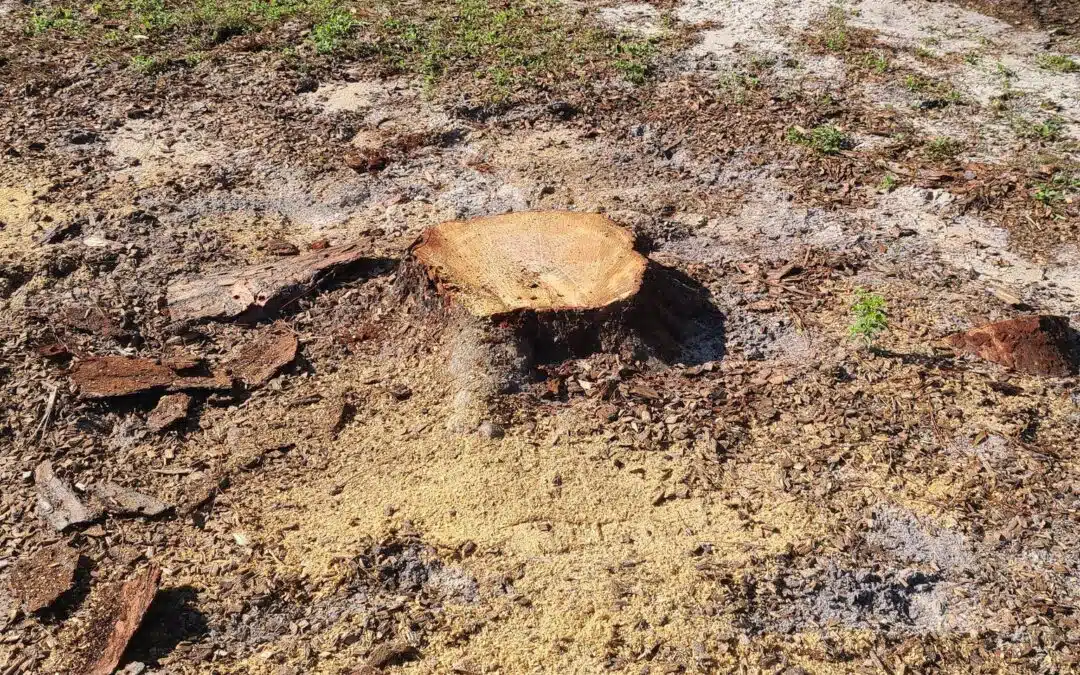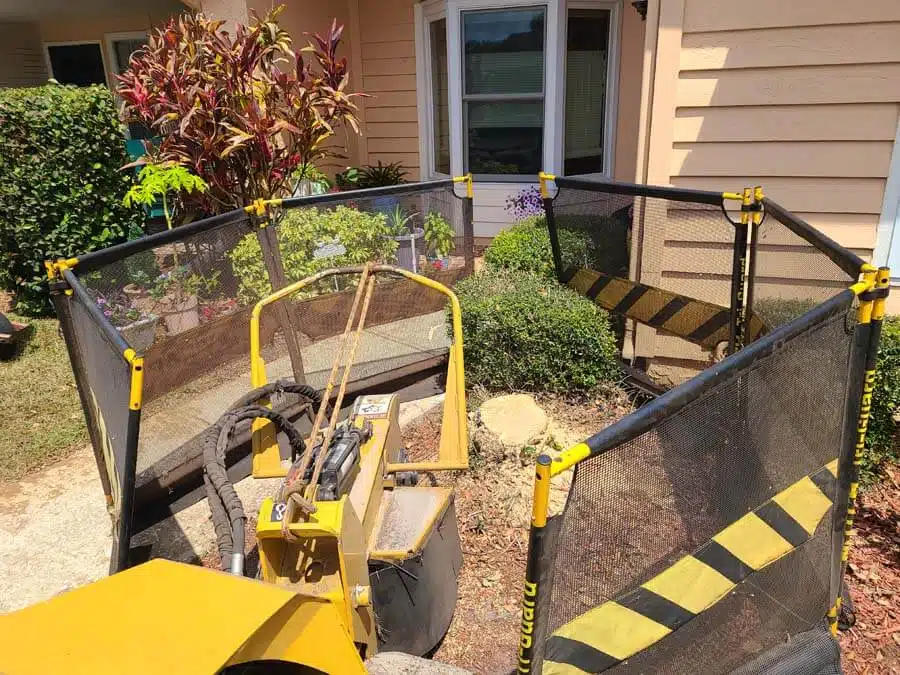
Once you’ve finished stump grinding, you might think the hard work is over, but it’s just the start of shaping your outdoor space. You’ll want to address soil quality and pick plants that thrive in the area, ensuring your garden not only looks good but lasts. Plus, there are smart ways to manage moisture and add finishing touches that bring everything together. These steps make all the difference, so let’s explore what you should focus on next.
Evaluate and Prepare the Soil Post-Stump Grinding
Once the stump grinding is complete, you should evaluate and prepare the soil to guarantee a healthy foundation for new plants or grass.
Start by removing any leftover wood chips and debris, as they can affect soil quality and hinder plant growth.
Next, test the soil’s pH and nutrient levels using a soil test kit to understand what amendments might be necessary.
If the soil appears compacted, loosen it with a garden fork or tiller to improve aeration and drainage.
Adding organic matter like compost or well-rotted manure will enrich the soil, promoting root development.
Finally, level the area to guarantee even planting and prevent water pooling.
Taking these steps will create ideal conditions for your new landscaping efforts to thrive.
Choose Suitable Plants for the Area
Although preparing the soil sets the stage, choosing suitable plants for the area guarantees your landscaping thrives long-term.
Start by evaluating sunlight, moisture, and soil type in the space left by the stump. Pick plants that naturally flourish in those conditions to reduce maintenance and improve growth. Native species often work best since they’re adapted to local climate and pests.
Consider plant size and root systems, ensuring they won’t interfere with underground utilities or regrow into the removed stump’s spot. Mixing perennials and annuals adds variety and keeps your landscape vibrant through seasons.
Finally, plan for proper spacing to avoid overcrowding, which can stunt growth and invite disease. By selecting the right plants, you’ll create a healthy, beautiful landscape that lasts.
Incorporate Mulch and Ground Cover
After selecting the right plants, you’ll want to protect and enhance your new landscape by incorporating mulch and ground cover.
Mulch helps retain soil moisture, suppresses weeds, and regulates temperature, giving your plants a healthy start. Spread a 2-3 inch layer of organic mulch like wood chips or bark around your plants, avoiding direct contact with stems to prevent rot.
Ground covers, such as creeping thyme or clover, fill empty spaces, reduce erosion, and add texture without needing much maintenance. They also create a visually appealing connection between mulch and plants.
Plan for Proper Drainage and Irrigation
Because proper drainage and irrigation directly impact your plants’ health, you should design your landscape to manage water efficiently.
After stump grinding, the soil can be uneven or compacted, causing water to pool or run off improperly. Start by grading the area to direct water away from foundations and prevent soggy spots.
Installing a simple drainage system, like French drains or swales, helps control excess water. For irrigation, consider drip systems or soaker hoses that deliver water directly to plant roots, reducing waste.
Avoid overwatering by adjusting schedules based on weather and soil moisture. Proper drainage and targeted irrigation will create a healthier environment for your new plants and prevent long-term issues such as root rot or erosion.
Taking these steps guarantees your landscape thrives.
Use Decorative Features to Enhance the Landscape
Adding decorative features can transform your landscape from plain to enchanting. After stump grinding, consider placing garden sculptures, birdbaths, or colorful planters to create focal points.
These elements draw attention away from the previously disturbed area and add personality to your yard. You can also use mulch or decorative stones around the stump site to create a neat, finished look.
Incorporate lighting to highlight these features at night, enhancing curb appeal and safety. Don’t forget to choose decorations that complement your home’s style and the surrounding plants.
Frequently Asked Questions
How Long Should I Wait Before Planting Over a Freshly Ground Stump?
You should wait about 6 to 12 months before planting over a freshly ground stump. This gives the wood chips and roots enough time to decompose and settle, preventing uneven ground or nutrient competition.
If you plant too soon, your new plants might struggle. In the meantime, you can speed up decomposition by adding compost or mulch and keeping the area moist.
Patience will help your new plants thrive!
Can Stump Grinding Damage Underground Utilities?
Yes, stump grinding can damage underground utilities if you’re not careful.
Before you start, always call your local utility marking service to locate and mark any buried lines.
The grinding machine’s blades can hit pipes, cables, or irrigation systems, causing costly damage or dangerous situations.
Is Stump Grinding Safe for My Lawn Equipment?
Yes, stump grinding is generally safe for your lawn equipment as long as you use the right machine and follow proper procedures.
Make sure to clear the area of rocks, debris, and metal objects that could damage the grinder. Using a professional-grade stump grinder or hiring an expert helps protect your tools.
Also, always wear protective gear and maintain your equipment regularly to avoid unexpected damage or malfunctions during the process.
What Are the Environmental Benefits of Stump Grinding?
You’ll find that stump grinding benefits the environment by preventing pest infestations and diseases that dead stumps can harbor.
It also reduces the need for chemical treatments, promoting healthier soil and surrounding plants.
Grinding stumps helps recycle organic material back into the earth, improving soil quality naturally.
Plus, it prevents unnecessary waste, making your yard safer and greener while supporting local ecosystems.
How Much Does Professional Stump Grinding Typically Cost?
Professional stump grinding typically costs between $100 and $400 per stump, depending on size and location.
If you have multiple stumps or tricky access, prices might be higher.
You’ll find some companies charge by the hour, usually around $75 to $150.
Getting a few quotes helps you compare and choose the best deal for your needs.
Don’t forget to ask about cleanup and disposal fees—they can add up!
Conclusion
After stump grinding, you’ve got a fresh canvas to transform your landscape. Start by prepping the soil well, then pick plants that thrive in your area to guarantee lasting beauty. Don’t forget to add mulch for moisture and weed control, and plan your drainage carefully to avoid water issues. Finally, bring your space to life with decorative touches like lighting or sculptures. With these tips, your garden will look inviting and vibrant in no time.