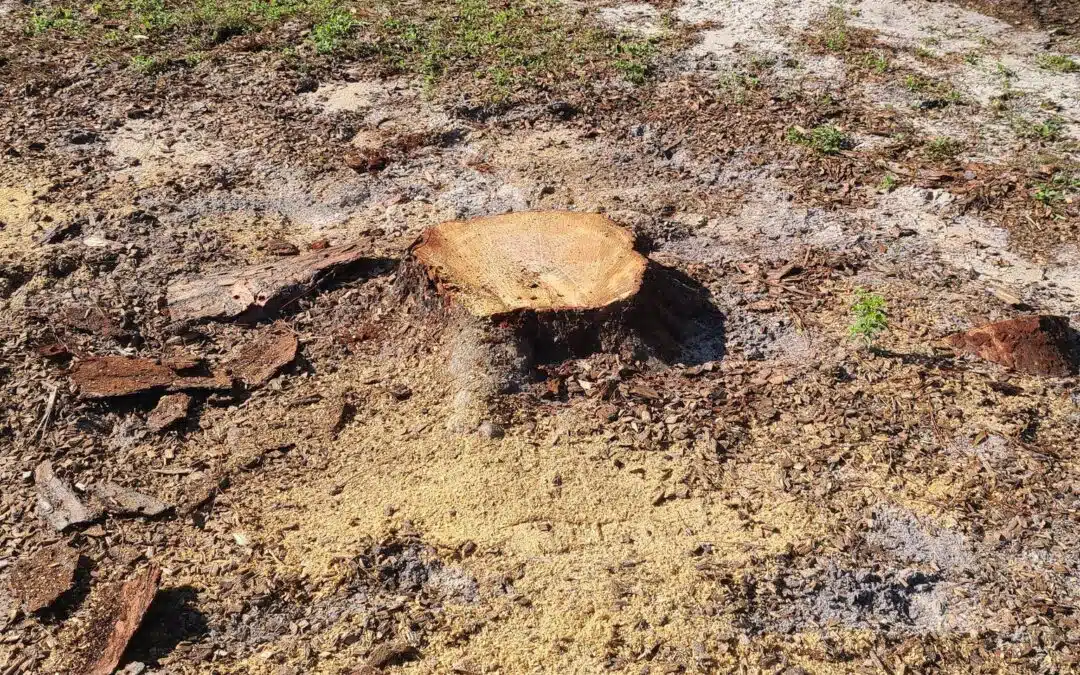
When you’re preparing your yard after stump grinding, there are key steps you can’t afford to miss. From clearing debris to marking underground utilities, each task plays an essential role in ensuring a smooth cleanup and future landscaping. You’ll want to gather the right tools and plan waste disposal carefully. But timing and safety gear also matter more than you might think—these details can make all the difference in your post-grind success.
Assess the Stump and Surrounding Area
Before you begin grinding, take a close look at the stump and its surroundings to identify any obstacles or hazards. Check for nearby structures, rocks, or utility lines that could interfere with your equipment or pose safety risks.
Notice the stump’s size, height, and root spread—this helps you plan how much grinding is needed. Look closely for nails, wire, or metal debris embedded in the stump, as these can damage your grinder.
Also, consider the ground’s stability; uneven or soft soil might affect your footing or machine control. By thoroughly evaluating the stump and its environment, you’ll avoid surprises during grinding and guarantee a safer, more efficient process.
Taking this step seriously sets you up for success right from the start.
Clear Debris and Vegetation Around the Stump
Once you’ve sized up the stump and its surroundings, the next step is clearing away any debris and vegetation nearby.
Remove leaves, twigs, rocks, and branches that could get in the way or damage your grinding equipment. Trim back any grass, weeds, or small plants growing close to the stump to create a clear workspace.
This helps you see the stump’s edges clearly and prevents accidental injury or equipment jams. Use a rake, pruning shears, or a weed trimmer for this task, depending on what’s around the stump.
Clearing the area also makes cleanup easier after grinding. Taking these simple steps guarantees you have safe, unobstructed access to the stump, setting you up for an efficient and smooth grinding process.
Mark Underground Utilities and Pipes
Since underground utilities and pipes often run near tree stumps, you need to identify and mark them clearly before grinding.
Start by contacting your local utility locating service to get a professional assessment of buried lines. Once the utilities are marked, use brightly colored spray paint or flags to highlight their exact locations around the stump.
This step prevents accidental damage to water, gas, or electrical lines during grinding. Make certain your marks are visible and won’t be easily washed away by weather or yard work.
Keeping these utilities clearly identified helps you avoid costly repairs and safety hazards. Taking the time to mark underground pipes guarantees a smooth, safe stump grinding process without unexpected interruptions or dangers.
Gather and Prepare Necessary Tools and Equipment
After marking underground utilities, the next step is to gather all the tools and equipment you’ll need to grind the stump safely and effectively.
Start with a reliable stump grinder suited for your yard’s size and the stump’s diameter. You’ll also want a shovel to expose the stump’s base and roots for better grinding access.
Have a rake handy to clear away debris as you work. Prepare extension cords if your grinder is electric and make certain they’re rated for outdoor use.
Keep a sturdy wheelbarrow or tarp nearby to collect and transport the wood chips and debris efficiently.
Finally, check that your grinder’s blades are sharp and in good condition; dull blades make the job harder and less effective.
Proper preparation sets you up for smooth stump grinding.
Ensure Proper Safety Gear Is Available
Before you start grinding, make sure you have the proper safety gear to protect yourself from flying debris and loud noise.
Always wear safety goggles to shield your eyes from wood chips and dust. A sturdy pair of gloves will protect your hands from splinters and sharp tools. Don’t forget a dust mask or respirator to prevent inhaling harmful particles.
Ear protection, like earmuffs or earplugs, is essential because stump grinders are very loud. Wear long sleeves and durable pants to guard your skin from scratches and debris. Slip-resistant boots will help you maintain stable footing while operating the grinder.
Taking these precautions not only keeps you safe but also lets you focus on the task, making the grinding process smoother and more efficient.
Plan for Stump Grinding Waste Disposal
Wearing the right safety gear helps you focus on the grinding, but you’ll also need a plan for handling the debris left behind.
Stump grinding creates a lot of wood chips and sawdust, which can clutter your yard quickly. Before you start, decide where you’ll pile the debris—choose a spot away from walkways and garden beds to avoid damage.
If you want to reuse the wood chips as mulch, collect them promptly to keep them fresh. Otherwise, arrange for disposal by checking local yard waste guidelines; some areas require special pick-ups or drop-off sites.
Having bags, tarps, or a wheelbarrow ready makes cleanup easier. Planning waste disposal ahead helps keep your yard neat and speeds up the project’s completion.
Schedule Grinding Timing Based on Weather Conditions
Since weather can greatly impact the efficiency and safety of stump grinding, you should plan your work around favorable conditions.
Avoid scheduling grinding when the ground is wet or muddy, as this can make the area slippery and increase the risk of accidents. Dry weather guarantees better traction for your equipment and prevents soil compaction.
Also, steer clear of windy days to reduce dust and debris blowing around, which can hinder visibility and comfort. Early mornings or late afternoons are ideal, as temperatures tend to be cooler, helping both you and your machinery perform better.
Keep an eye on the forecast and be ready to adjust your timing. By aligning grinding with prime weather, you’ll make the process smoother, safer, and more effective.
Frequently Asked Questions
How Deep Should the Stump Grinding Go Below Ground Level?
You should grind the stump about 4 to 6 inches below ground level to guarantee proper removal and prevent regrowth.
Going deeper helps avoid future obstacles when planting or landscaping.
Make sure you clear away the wood chips afterward to fill the hole with soil, promoting healthy grass or plant growth.
If the stump’s from a large tree, grinding even deeper might be necessary for stability and aesthetics.
Can Stump Grinding Prevent New Tree Growth From the Stump?
Yes, stump grinding can help prevent new tree growth from the stump because it removes the main part of the stump and roots where new sprouts usually emerge.
However, some tree species are stubborn and might send up shoots even after grinding.
To be sure, you should monitor the area and consider applying a stump killer or herbicide designed to stop regrowth.
That way, you’ll keep your yard clear and prevent unwanted saplings.
How Long Does the Stump Grinding Process Typically Take?
Stump grinding usually takes about 30 minutes to an hour per stump, depending on its size and the type of grinder used.
If the stump is large or the roots extend deeply, it might take longer. You’ll want to clear the area beforehand to speed things up.
Keep in mind, multiple stumps or tough wood can extend the time, but generally, the process is pretty quick and efficient.
Is It Possible to Grind Stumps Near Sidewalks or Driveways?
Yes, you can grind stumps near sidewalks or driveways, but you need to be cautious.
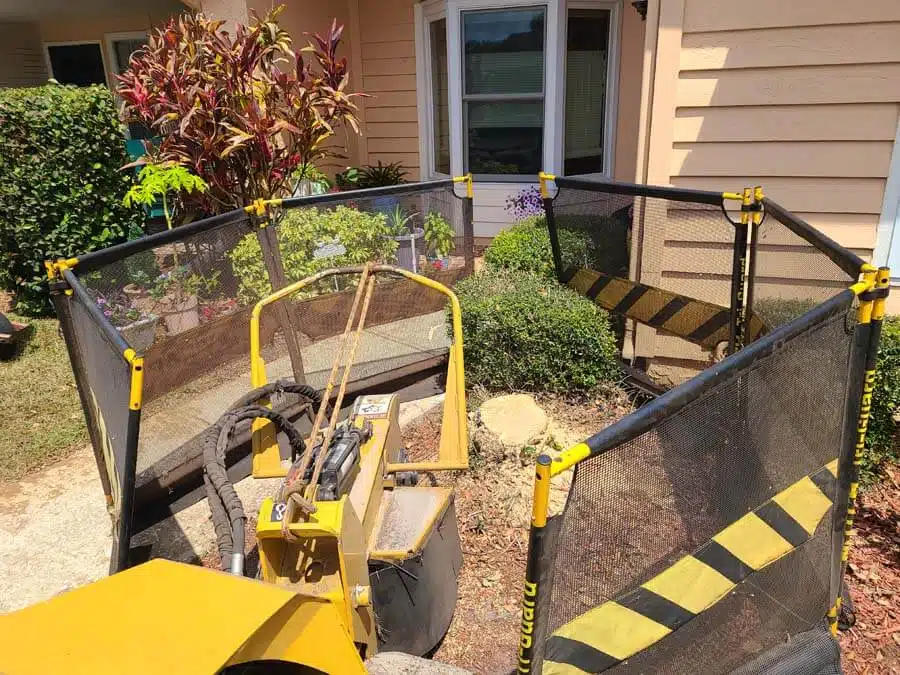
You’ll want to use protective barriers to prevent damage to concrete or asphalt surfaces. It’s also smart to check for any underground utilities before starting.
Taking these precautions helps you safely remove stumps without harming surrounding areas, ensuring your yard looks clean and smooth afterward.
Just proceed carefully and plan ahead.
What Plants Grow Best in Areas After Stump Removal?
You’ll want to choose plants that thrive in disturbed soil and partial shade after stump removal.
Consider hardy ground covers like creeping thyme or hostas, which help prevent erosion. Perennials such as daylilies or black-eyed Susans also do well.
If you prefer shrubs, try boxwoods or hydrangeas.
Make sure to improve the soil with compost first, so your new plants have the nutrients they need to flourish.
Conclusion
Now that you know how to prep your yard post-stump grinding, you’re ready to tackle the job safely and efficiently. Always assess the area, clear debris, and mark underground utilities before you start. Gather your tools and safety gear, and plan for waste disposal to keep your yard tidy. Don’t forget to take into account weather conditions when scheduling. With these steps, you’ll have a smooth, hassle-free stump grinding experience that leaves your yard looking great.