If you’ve ever dealt with a stubborn tree stump in your yard, you know it’s more than just an eyesore—it can interfere with landscaping and even pose safety risks. In Florida’s unique climate, choosing the right grinding technique is vital to guarantee complete removal and prevent regrowth. But what exactly makes tree base grinding effective here, and how can you make certain the job’s done right without wasting time or money?
Understanding the Importance of Tree Base Grinding
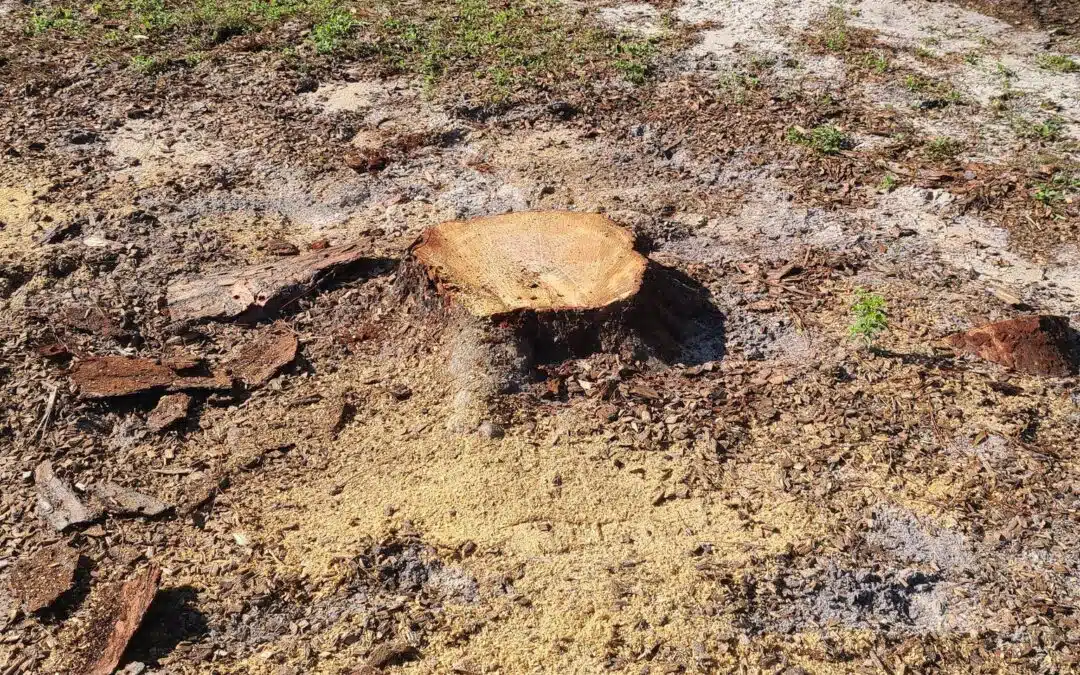
Although removing a tree might seem like the final step, you can’t overlook the importance of grinding the tree base. When you grind the stump, you’re preventing new sprouts from growing and reducing the risk of pests and diseases that thrive on decaying wood.
It also improves safety by eliminating tripping hazards in your yard. Plus, grinding allows you to reclaim the space for landscaping or construction projects without unsightly stumps getting in the way.
In Florida’s humid climate, leftover stumps can rot quickly, attracting insects like termites. By grinding the base, you’re speeding up natural decomposition and keeping your property cleaner and more attractive.
Common Challenges in Residential Stump Removal
Grinding the tree base solves many problems, but removing stumps from residential properties still comes with its own set of challenges. You’ll often face limited space, making it tricky to maneuver equipment without damaging surrounding plants or structures.
Roots can extend far beyond the stump, requiring careful removal to prevent future growth issues or damage to underground utilities. You might also encounter uneven terrain, which complicates grinding and cleanup.
Additionally, dealing with debris and ensuring proper disposal can be time-consuming. Weather conditions, such as Florida’s frequent rain, can turn the worksite muddy and unsafe.
Understanding these challenges helps you prepare better and choose professional services equipped to handle residential stump removal efficiently and safely.
Choosing the Right Equipment for Stump Grinding
Selecting the right equipment plays an essential role in making stump grinding efficient and safe. You’ll want a stump grinder that matches the size and toughness of the stump you’re tackling.
For smaller stumps, a handheld or walk-behind grinder offers control and maneuverability. Larger stumps demand a more powerful, self-propelled machine to handle the thicker roots and dense wood.
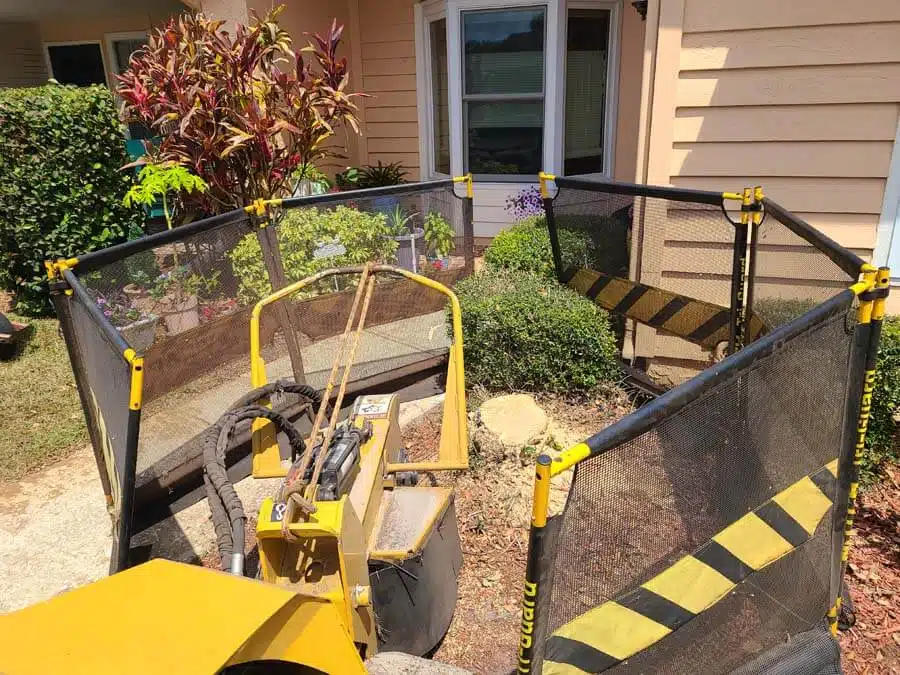
Assess the grinder’s cutting wheel size and horsepower; bigger wheels and higher power mean faster, smoother grinding. Don’t forget to take into account safety features, like protective guards and easy-to-use controls, to minimize risks during operation.
Choosing equipment suited to your specific job guarantees you get thorough stump removal without unnecessary damage or extra work. This initial step sets a solid foundation before you begin grinding.
Step-by-Step Process of Effective Stump Grinding
To effectively grind a stump, you’ll want to follow a clear, step-by-step process that guarantees thorough removal while keeping safety in mind.
First, clear the area around the stump of rocks, debris, and any obstacles. Next, equip yourself with safety gear like goggles, ear protection, and gloves.
Start the stump grinder and position the cutting wheel above the stump’s surface. Gradually lower the wheel into the wood, moving it back and forth to chip away at the stump evenly.
Continue grinding deeper until you reach about 4-6 inches below ground level. After grinding, fill the hole with soil or mulch to level the area.
Finally, clean and inspect your equipment to verify it’s ready for the next job.
Environmental Benefits of Proper Stump Removal
Once you’ve completed the stump grinding process, you’ll notice more than just a cleared space; proper stump removal also supports a healthier environment.
Removing stumps eliminates habitats for pests like termites and beetles, reducing the need for harmful chemical treatments. It also prevents fungal diseases from spreading to nearby plants, helping maintain your landscape’s health naturally.
By grinding down stumps, you promote better soil aeration and nutrient cycling, which benefits surrounding trees and vegetation. Additionally, the wood chips left behind act as organic mulch, conserving moisture and reducing erosion.
Proper stump removal also helps prevent accidental injuries from tripping over hidden roots or stumps, keeping your outdoor space safe.
Cost Factors Influencing Stump Grinding Services
While stump grinding might seem straightforward, several cost factors can influence the final price you’ll pay for the service.
The size and diameter of the stump directly affect the time and effort required, increasing costs for larger stumps. Accessibility also plays a role—if your stump is in a tight spot or near structures, technicians might need special equipment or extra care, which can raise the price.
Additionally, the location within Florida matters; urban areas often have higher rates than rural ones.
Finally, the condition of the stump, such as rot or root depth, can impact the difficulty of grinding. Knowing these factors helps you anticipate costs and choose the best service that fits your budget without compromising quality.
Safety Measures During Residential Stump Grinding
Three key safety measures you should prioritize during residential stump grinding include wearing protective gear, securing the area, and ensuring proper equipment use.
Always wear safety goggles, gloves, ear protection, and sturdy boots to protect yourself from flying debris and loud noise.
Next, secure the grinding zone by clearing people, pets, and fragile items away to prevent accidents. Use caution tape or barriers if needed.
Finally, familiarize yourself with the stump grinder’s operation manual before starting. Check that all guards are in place, and never bypass safety features.
Operate the machine steadily and avoid loose clothing that could get caught. Following these steps helps you maintain control and minimize injury risks while grinding stumps safely.
Selecting a Reliable Stump Grinding Service in Odessa, FL
Taking the proper safety measures during stump grinding sets a solid foundation, but choosing the right service in Odessa, FL, makes all the difference in getting the job done efficiently and safely.
When selecting a stump grinding company, look for professionals with solid local experience and positive customer reviews. Verify that they’re fully licensed and insured to protect yourself from liability.
Don’t hesitate to ask about the equipment they use; modern, well-maintained machines guarantee faster and cleaner results. Also, inquire about their cleanup process—reliable services leave your yard tidy.
Request a clear, upfront estimate with no hidden fees to avoid surprises. By doing your homework and picking a trusted service, you’ll guarantee the job’s done right, saving time, money, and hassle in the long run.
Frequently Asked Questions
How Long Does the Stump Grinding Process Typically Take?
Stump grinding usually takes about 30 minutes to an hour, depending on the stump’s size and root depth.
If your stump is large or has extensive roots, it may take longer.
You’ll want to make sure the grinder reaches about 6-12 inches below ground level for effective removal.
If you have multiple stumps, the process will naturally take more time, but a professional can often handle it efficiently.
Can Tree Base Grinding Prevent Future Pest Infestations?
Yes, tree base grinding can help prevent future pest infestations.
When you grind the stump down, you remove the decaying wood that pests like termites and beetles are attracted to. This reduces the chance of these pests settling near your home or garden.
Plus, grinding speeds up the natural decomposition process, so you’re less likely to deal with pest-related problems later on.
It’s a smart step to keep your property pest-free.
Is Stump Grinding Noisy or Disruptive to Neighbors?
Yes, stump grinding can be noisy and might disrupt your neighbors, especially if you live in a quiet area.
The grinding machine produces loud sounds while breaking down the stump, which usually lasts a few hours depending on the stump size.
To minimize disruption, you can inform your neighbors beforehand or schedule the work during daytime hours when noise is less bothersome.
Using professional services often guarantees quicker, more efficient grinding.
What Are the Disposal Options for the Wood Chips Produced?
You can use wood chips from stump grinding in several ways.
You might spread them as mulch around your garden to retain moisture and reduce weeds.
Alternatively, you could compost them, turning them into nutrient-rich soil.
Some people use wood chips for pathways or decorative landscaping.
If you don’t want to keep them, check if local green waste facilities accept wood chips for recycling or disposal.
Can I Plant New Grass or Trees Immediately After Grinding?
You shouldn’t plant new grass or trees immediately after grinding.
The leftover wood chips can affect soil quality and slow down nutrient absorption.
It’s best to wait a few weeks, remove excess chips, and possibly add fresh topsoil or compost.
This gives the ground time to settle and improves conditions for new plants.
Taking these steps helps guarantee your new grass or trees grow strong and healthy.
Conclusion
By choosing effective tree base grinding solutions in Florida, you’ll reclaim your yard’s space while preventing unwanted sprouting and enhancing its look. Understanding the challenges and selecting the right equipment guarantees the job’s done thoroughly and safely. Plus, proper stump removal supports a cleaner environment around your home. When hiring a service in Odessa, FL, prioritize experience and safety to get the best results and enjoy a healthier, more beautiful landscape.