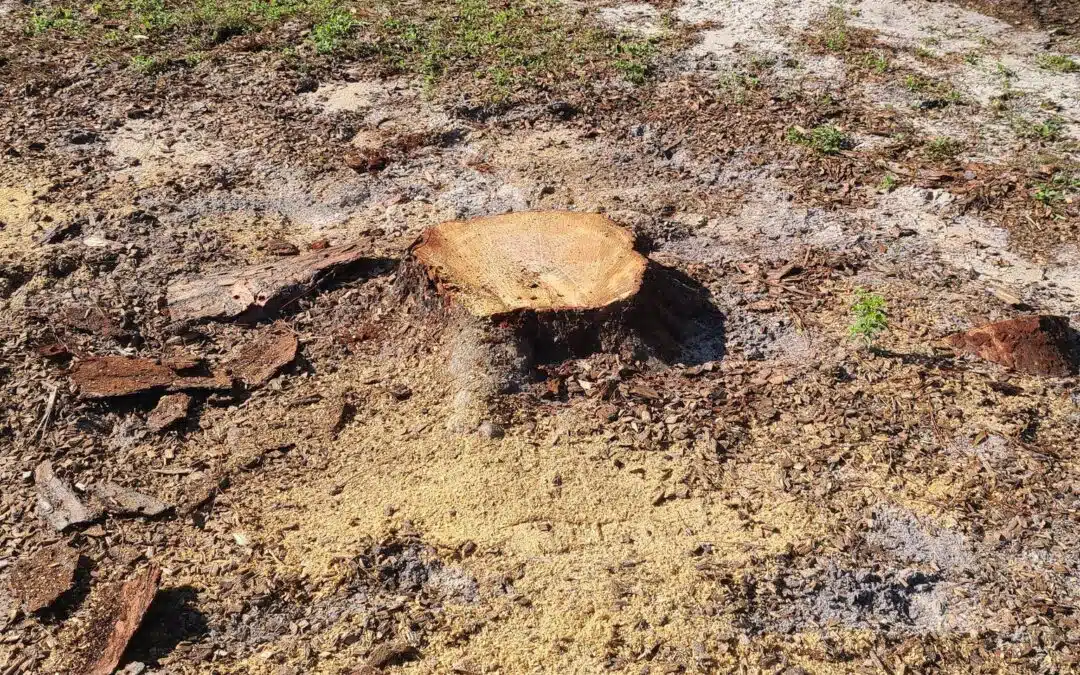
Before you start stump grinding, you’ll want to make sure your yard is ready for the job. Taking a few simple steps can help avoid damage and keep the process smooth. From clearing debris to marking underground lines, there’s more to prepare than you might think. Getting these details right upfront will save you time and trouble once the grinder arrives.
Assessing the Yard for Safety and Accessibility
Before you begin stump grinding, take a thorough look around your yard to identify any hazards or obstacles that could interfere with the equipment.
Check for uneven ground, exposed roots, or hidden rocks that might cause the grinder to tip or get stuck. Make sure there’s a clear path for the machinery to access the stump without damaging your garden or lawn.
Look out for overhead wires or low branches that could pose a risk. Also, consider the size and weight of the equipment; verify your driveway or yard entrances can support it.
If there’s limited space, think about how the operator will maneuver safely. Evaluating these factors helps prevent accidents and guarantees the job goes smoothly.
Taking time now saves you headaches later.
Clearing the Area Around the Stump
Three feet of clear space around the stump gives you enough room to work safely and efficiently.
Begin by removing any rocks, sticks, or debris that could interfere with the grinder or become hazardous projectiles. Trim back low-hanging branches or nearby plants that might get in the way during the grinding process. If you have lawn furniture, garden tools, or other items close by, relocate them to prevent damage.
Clearing this area also helps you maintain better visibility and control while operating the equipment. Make certain the ground is free from loose soil or slippery surfaces that could cause you to lose footing.
Taking these steps guarantees a smoother, safer stump grinding experience and protects your yard and equipment from unnecessary damage.
Marking Underground Utilities and Irrigation Lines
Several underground utilities and irrigation lines often run beneath your yard, and marking them accurately is essential before you start grinding.
Begin by contacting your local utility notification center to have all underground lines professionally located and marked. Use brightly colored spray paint or flags to clearly identify different utilities—typically red for electric, blue for water, and yellow for gas.
Don’t forget to mark irrigation lines separately with green flags or paint. By doing this, you’ll avoid damaging crucial infrastructure and prevent costly repairs or dangerous accidents.
Take the time to walk the entire stump area carefully, ensuring all marked lines are visible. With these precautions, you’ll create a safer workspace and make the stump grinding process smoother and worry-free.
Choosing the Right Time for Stump Grinding
Although you might be enthusiastic to get started, choosing the right time for stump grinding is essential to confirm the job goes smoothly. Aim for dry weather because wet soil can make the process messy and harder to manage. Avoid grinding immediately after heavy rain to prevent equipment from getting stuck or damaging your yard.
Early spring or fall usually offer ideal conditions—soil is firm, and temperatures are moderate. Also, consider your schedule; picking a day without high foot traffic ensures safety and efficiency.
Finally, check local regulations, as some areas restrict stump grinding during certain seasons to protect wildlife or reduce noise. By selecting the best timing, you’ll make the entire process easier and more effective.
Preparing Equipment and Protecting Nearby Plants
Before you start grinding, make certain your equipment is in top shape and that nearby plants are well protected.
Check your stump grinder for any loose parts, verify the blades are sharp, and confirm fuel or battery levels. Proper maintenance reduces the risk of breakdowns and guarantees efficient grinding.
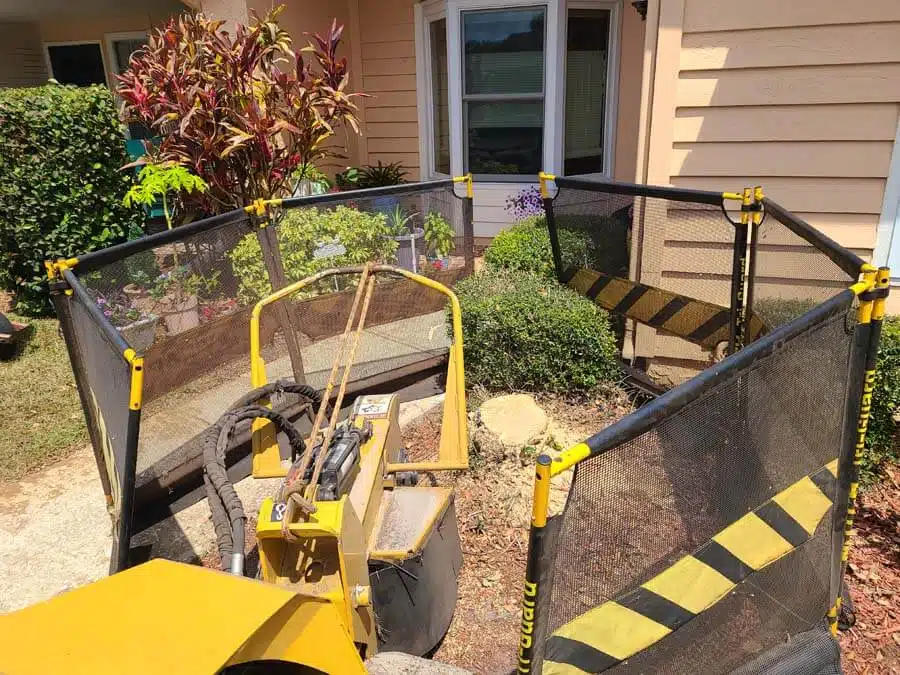
Next, cover delicate plants and shrubs nearby with sturdy tarps or plywood to shield them from flying debris. You can also create a temporary barrier using stakes and netting to keep dust and wood chips at bay.
Clear the area of any tools, toys, or outdoor furniture to prevent damage. Taking these steps helps protect your yard and keeps the job running smoothly without unexpected interruptions or harm to your landscaping.
Frequently Asked Questions
How Deep Does Stump Grinding Usually Go?
Stump grinding usually goes about 4 to 6 inches below ground level.
This depth is enough to remove the visible part of the stump and some roots, making it easier to cover with soil and plant grass or other vegetation.
If you want a cleaner look or need to avoid root regrowth, grinding deeper might be necessary.
Just remember, going too deep can be harder and risk damaging underground utilities.
Can I Use the Wood Chips From Stump Grinding as Mulch?
Yes, you can use the wood chips from stump grinding as mulch. They’re great for retaining moisture and suppressing weeds.
Just keep in mind that fresh wood chips might temporarily tie up nitrogen in your soil, so it’s a good idea to let them age for a few weeks or add some nitrogen-rich fertilizer.
Spread them around your plants to improve soil health and give your garden a neat, natural look.
How Long Does the Stump Grinding Process Take?
The stump grinding process usually takes about 30 minutes to a couple of hours, depending on the stump’s size, type, and root system complexity.
Smaller stumps are quicker, while larger or older ones with extensive roots take longer. If you’ve got multiple stumps, expect more time.
The equipment and operator’s experience also impact the duration, but generally, you won’t have to wait long before your yard looks clean and ready for the next step.
Is Stump Grinding Safe for Pets and Children?
Yes, stump grinding is generally safe for pets and children, but you should keep them away during the actual grinding process.
The machine has sharp, fast-moving parts that can be dangerous. After grinding, make sure to clear the area of wood chips and debris to prevent any choking hazards or injuries.
Always supervise your kids and pets closely until the yard is fully cleaned and safe to play in again.
What Should I Do With the Hole Left After Grinding?
After grinding, you should fill the hole with topsoil or a mix of soil and compost to level your yard.
Tamp it down gently to prevent sinking, then plant grass seed or lay sod over the area to restore your lawn’s appearance.
Keep the soil moist to help the grass establish.
This approach prevents tripping hazards and promotes quick recovery, making your yard safe and looking great again.
Conclusion
By following these steps, you’ll make stump grinding safer and more efficient. Assess your yard carefully, clear a wide area around the stump, and mark any underground utilities to avoid damage. Pick a dry day for the job, and get your equipment ready while protecting nearby plants. Taking these simple precautions guarantees a smooth process and helps keep your yard looking great throughout—and after—the grinding is done.