If you’ve got a tree stump lingering in your yard, you know it can be a stubborn eyesore and a tripping hazard. Removing it might seem like a big task, but with the right approach, you can handle it yourself without too much hassle. Before you start, it’s important to understand the tools and safety steps that will make the whole process smoother and more efficient. Let’s explore how you can tackle this project effectively.
Understanding the Basics of Tree Stump Removal
Before you start removing a tree stump, it’s important to understand the basic methods and tools involved. You have several options, including digging it out, grinding it down, or using chemical treatments to accelerate decay.
Digging requires manual effort and patience, as you’ll need to expose and sever the roots. Grinding involves specialized machinery to chip away the stump until it’s below ground level.
Chemical methods take longer but require less physical work, gradually softening the wood for easier removal later. Each approach depends on your stump’s size, location, and how quickly you want it gone.
Knowing these basics helps you choose the right method, ensuring you approach the job efficiently and avoid unnecessary frustration. Once you grasp these fundamentals, you’ll be ready to gather your tools and begin.
Essential Tools and Equipment for Stump Grinding
If you decide that grinding is the best way to remove your tree stump, you’ll need the right tools to get the job done effectively.
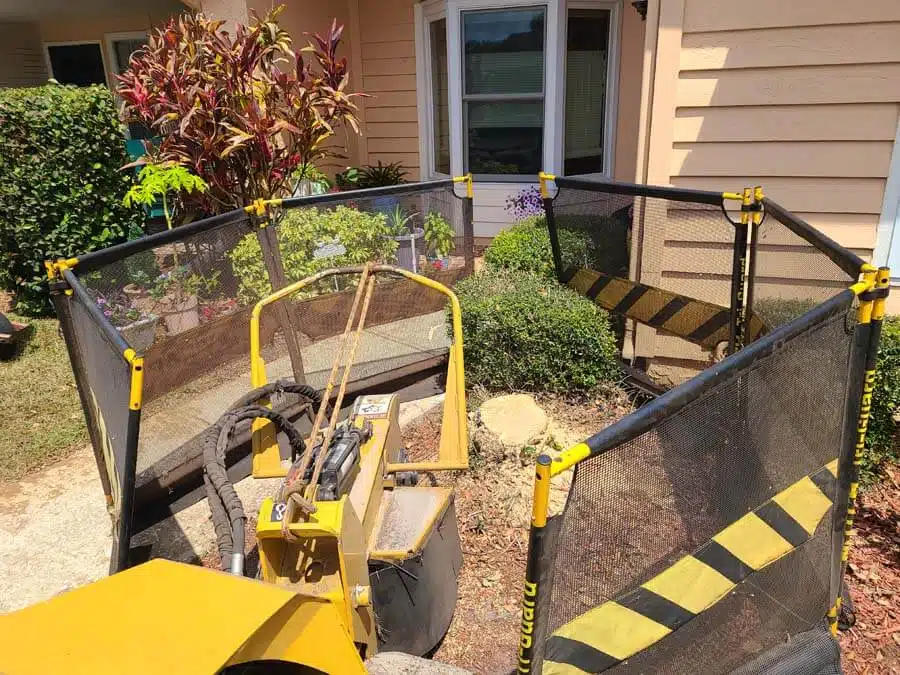
First, a stump grinder is essential—this powerful machine uses a rotating cutting disk to chip away at the wood. You can rent one from a local hardware store if you don’t want to buy it.
Additionally, protective gear like gloves, safety glasses, and ear protection will keep you safe during operation. A shovel or mattock helps clear dirt and expose roots before grinding.
You might also want a rake to clean up debris afterward. Finally, having a sturdy broom or leaf blower will make the cleanup process easier once the stump is ground down to below ground level.
Safety Precautions When Removing Tree Stumps
Though removing tree stumps can seem straightforward, you’ll need to prioritize safety to prevent injuries and damage. Always wear protective gear like gloves, safety goggles, and sturdy boots to shield yourself from sharp tools and flying debris.
Make sure your tools are in good condition and handle them carefully. Clear the area of rocks, toys, or pets before starting to avoid accidents. If you’re using chemicals or machinery, read all instructions thoroughly and follow local regulations.
Never work alone—having someone nearby can help in emergencies. Also, watch for underground utilities before digging to prevent hazards. Taking these precautions will keep you safe and make the stump removal process smoother and more efficient.
Step-by-Step Guide to Grinding Tree Stumps at Home
Start by gathering the right tools for grinding your tree stump, including a stump grinder, safety gear, and possibly a shovel.
First, clear the area around the stump, removing rocks and debris to avoid accidents.
Put on your safety gear—gloves, goggles, ear protection, and sturdy boots.
Next, position the stump grinder over the stump’s center.
Turn on the machine and slowly lower the grinding wheel onto the stump, moving it back and forth to chip away wood.
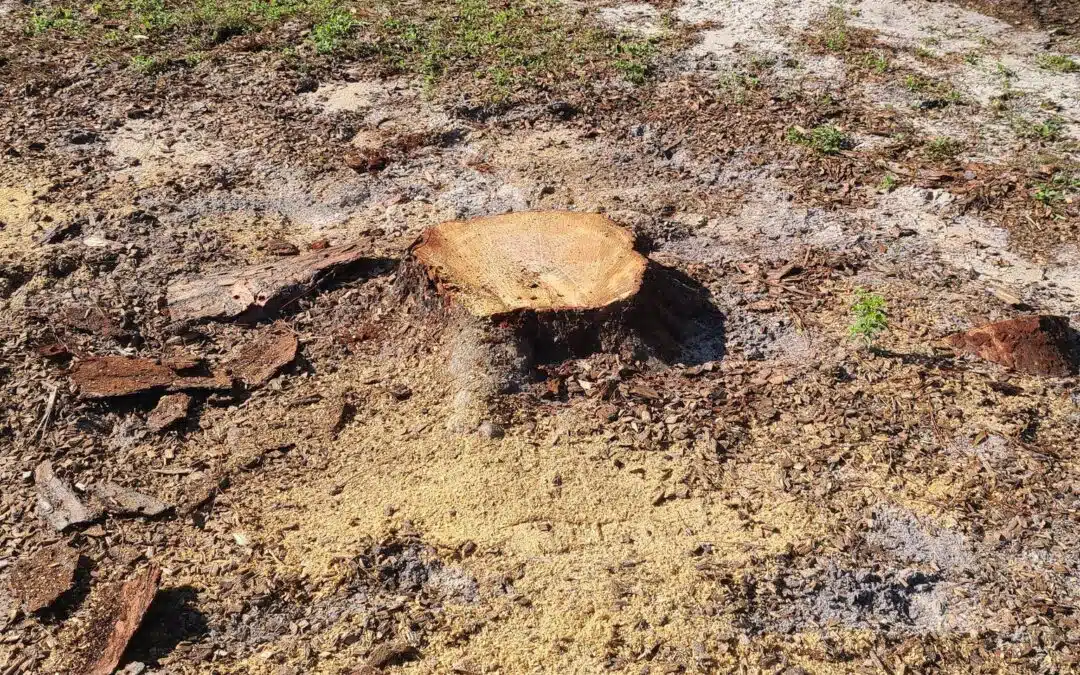
Gradually grind down the stump until it’s about 6 to 12 inches below ground level.
Once done, fill the hole with soil or mulch to level the ground.
Finally, clean and store your tools safely.
This step-by-step approach guarantees effective and safe stump grinding at home.
Alternative Methods for Stump Removal Without Grinding
Several effective methods exist for removing tree stumps without using a grinder. You can try manual removal by digging around the stump to expose roots, then cutting them with an axe or saw before prying the stump out.
Another option is chemical removal—apply a stump remover containing potassium nitrate to accelerate decay, making it easier to break down over weeks.
Burning the stump is also possible if local regulations allow; drill holes into the stump, fill them with kerosene, and ignite carefully to reduce the wood to ash.
Finally, you might consider natural decomposition by covering the stump with soil and mulch to encourage fungal growth and gradual decay.
Each method suits different situations, so pick the one that fits your patience, tools, and local rules best.
Preparing the Area Before Stump Removal
Before you begin removing a tree stump, you’ll want to clear the surrounding area of any debris, rocks, or obstacles that could hinder your work or cause injury.
Make sure the ground is level and dry to provide a stable surface for your tools and equipment. Mark any underground utilities by contacting your local utility company to avoid accidents.
Wear protective gear like gloves, safety goggles, and sturdy boots to keep yourself safe during the process. Gather all necessary tools close by, such as shovels, axes, or stump grinders, so you don’t waste time searching.
Creating a clean, hazard-free workspace helps you work efficiently and reduces the risk of accidents while tackling the stump removal. Preparation is key to a smooth and safe project.
Disposal and Cleanup After Stump Grinding
Once the stump grinding is complete, you’ll need to focus on disposing of the wood chips and cleaning the area to restore your yard’s appearance.
First, rake up the wood chips and any debris left behind. You can use these chips as mulch around your garden or flower beds, which helps retain moisture and suppress weeds. If you don’t want to keep them, bag the chips for disposal or check if your local yard waste facility accepts them.
Next, fill the hole left by the stump with soil or compost to level the ground.
Finally, water the area lightly to help settle the soil. Cleaning up promptly guarantees your yard looks neat and prevents pests from being attracted to leftover wood.
Benefits of Hiring Professional Stump Grinding Services in Odessa FL
When you hire professional stump grinding services in Odessa FL, you save time and effort while ensuring the job gets done safely and efficiently.
Professionals bring specialized equipment that quickly grinds stumps to below ground level, preventing tripping hazards and making your yard ready for new landscaping. You don’t have to worry about handling heavy machinery or dealing with tough roots yourself.
Experts also know how to protect your property from damage during the process. Plus, they dispose of the debris properly, leaving your yard clean and hassle-free.
Cost-Effective Tips for Residential Stump Removal
While professional stump grinding offers convenience and safety, you might want to explore budget-friendly ways to remove stumps yourself.
Start by using manual tools like a mattock, shovel, and pruning saw to dig around and cut exposed roots. You can also try natural decomposition methods by drilling holes into the stump and applying a stump removal chemical or a mixture of Epsom salts to speed up decay.
Another cost-effective trick is burning the stump after clearing debris, but be sure to follow local regulations and exercise caution.
Renting a stump grinder for a day can save money compared to hiring a service, especially if you have multiple stumps.
With patience and effort, you can clear your yard without breaking the bank.
Frequently Asked Questions
How Long Does It Take for a Stump to Naturally Decompose?
It usually takes about 3 to 7 years for a tree stump to naturally decompose, but this depends on the tree species, size, and environmental conditions.
If the stump’s large or dense hardwood, it’ll take longer.
You can speed up the process by keeping it moist and breaking it up.
Fungi and insects help too, so creating a favorable environment will get that stump to break down faster.
Can Tree Stumps Attract Pests or Insects?
Yes, tree stumps can attract pests and insects. When a stump starts to decay, it becomes a perfect habitat for termites, ants, beetles, and other wood-boring insects.
These pests might eventually spread to nearby plants or even your home if left untreated. To avoid this, you should remove or treat the stump promptly.
Keeping your yard clean and dry also helps prevent infestations and protects your property.
Is It Safe to Plant New Trees Near a Removed Stump?
Yes, it’s generally safe to plant new trees near a removed stump, but you should wait until the stump fully decomposes or is completely removed.
Fresh stumps can harbor pests or diseases that might affect your new tree. Also, leftover roots can compete for nutrients and water.
To give your new tree the best start, clear out the old roots and improve the soil before planting nearby.
What Types of Trees Have the Hardest Stumps to Remove?
You’ll find that oak, hickory, and maple trees have the hardest stumps to remove because their wood is dense and tough.
These species develop extensive root systems that dig deep, making removal more challenging. If you’re tackling these stumps, be prepared for extra effort or consider specialized tools.
Pine and softer hardwoods generally come out easier. Knowing the tree type helps you plan your stump removal strategy better.
Can Chemicals Speed up Stump Decomposition Effectively?
Yes, chemicals can speed up stump decomposition effectively.
You’ll want to use a potassium nitrate-based stump remover, which helps break down the wood fibers faster. Just drill holes into the stump, pour in the chemical, and keep it moist.
It usually takes a few weeks to a few months, depending on the stump size and type.
Remember to follow safety instructions to protect yourself and the surrounding plants while using these chemicals.
Conclusion
Removing tree stumps at home doesn’t have to be difficult. With the right tools, safety precautions, and a clear plan, you can grind stumps efficiently and clean up afterward with ease. Whether you choose to tackle it yourself or consider professional help, understanding the process saves time and effort. Follow these steps, stay safe, and enjoy your clear, stump-free yard in no time. You’ve got this!