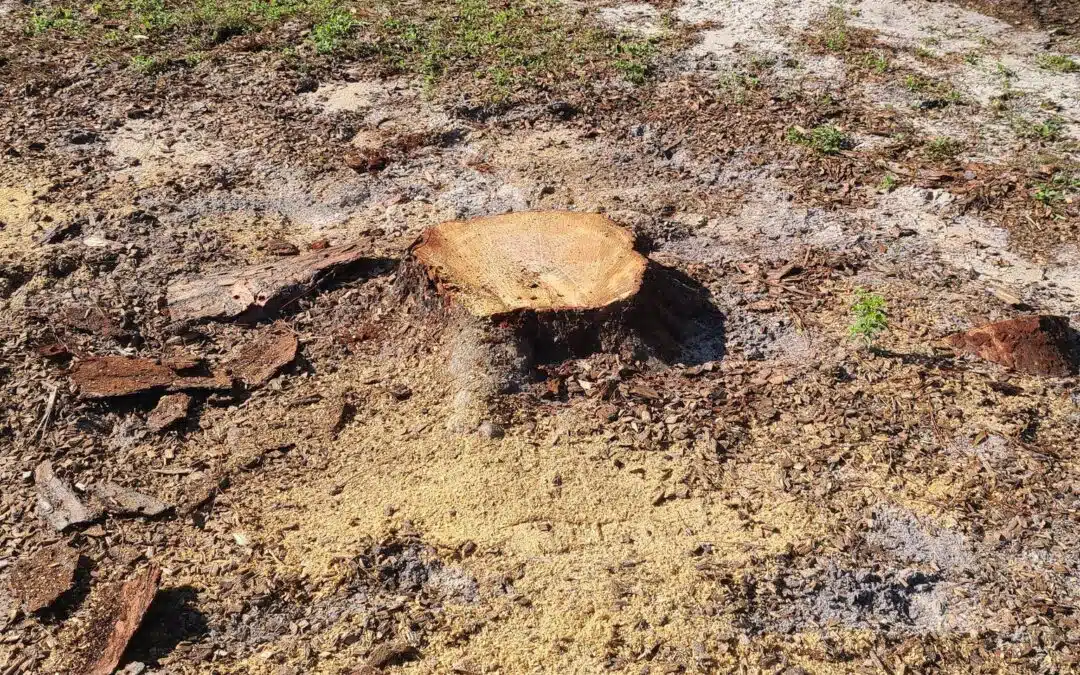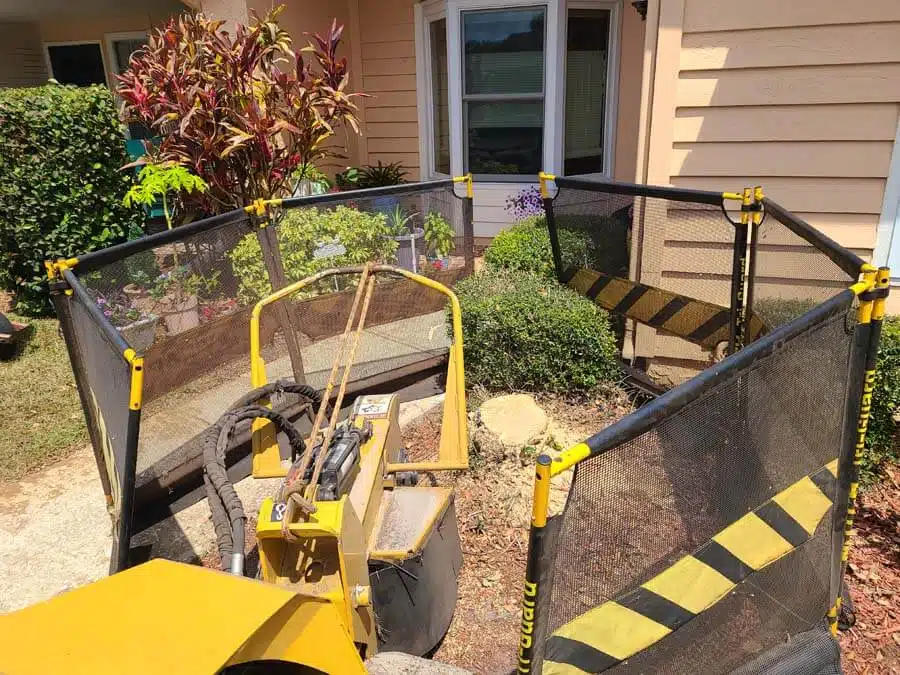
Once the stump is ground down, your yard won’t instantly look its best—you’ll need to take a few thoughtful steps to restore the area. You might wonder how to handle the leftover debris, level the uneven soil, or choose the right plants to fill the space. Knowing these details can save you time and prevent future problems, but the process involves more than just simple cleanup. Let’s explore what comes next.
Assessing the Yard After Stump Grinding
Once the stump grinding is complete, you should carefully assess your yard to identify any uneven ground or leftover debris.
Walk around the area, paying close attention to the spot where the stump once stood. Look for depressions or raised areas that could cause issues when mowing or walking.
Check the soil’s firmness by pressing it with your foot—you want it to feel stable, not loose or spongy.
Also, observe the surrounding grass and plants to see if any were disturbed during grinding.
This inspection helps you spot problem areas early, so you can address them before planting new grass or landscaping.
Taking this step guarantees your yard will be safe, level, and ready for the next phase of restoration.
Clearing Debris and Remaining Wood Chips
Clearing debris and remaining wood chips is an essential step after stump grinding to guarantee a clean and safe yard.
Start by raking the area thoroughly to gather loose chips, bark, and any small wood fragments. These leftover pieces can attract pests or cause uneven footing, so removing them promptly is key.
Use a sturdy rake or leaf blower to collect debris into manageable piles, then dispose of them according to local yard waste regulations.
Don’t forget to check for nails, screws, or metal pieces from the stump grinder that might be hidden among the wood chips.
Taking the time to clear this debris not only improves your yard’s appearance but also makes the space safer for kids, pets, and lawn equipment.
Leveling the Ground for New Plantings
Before you start planting, you’ll want to level the ground to create a smooth and even surface.
Begin by filling in any holes or low spots left from stump grinding with topsoil or a soil mix that matches your yard’s existing soil. Use a rake to spread the soil evenly, then tamp it down gently with your foot or a tamper to prevent settling.
Make sure the surface slopes slightly away from buildings to avoid water pooling. Afterward, recheck for any unevenness and add more soil if needed.
Leveling now makes planting easier and helps young plants establish roots without struggling against uneven terrain. Taking these steps sets the stage for a healthy, attractive garden or lawn.
Soil Testing and Amendment Recommendations
Although leveling the ground is essential, testing your soil’s condition is just as important to guarantee your plants thrive. Start by collecting soil samples from various yard spots, then send them to a local extension service or use an at-home test kit.
This lets you understand pH levels, nutrient content, and soil texture. Based on results, you can amend your soil effectively. For acidic soil, add lime to raise pH; for alkaline soil, sulfur can help lower it.
Incorporate organic matter like compost to improve structure and fertility. Don’t forget to adjust nutrient levels—nitrogen, phosphorus, and potassium—according to recommendations.
Proper soil testing and amendments create a healthy foundation, ensuring your yard recovers well after stump grinding and supports vigorous plant growth.
Choosing Appropriate Grass or Plants for Replanting
How do you choose the best grass or plants to replant after stump grinding?
First, consider your yard’s sunlight exposure. If your area gets plenty of sun, opt for sun-loving grasses like Bermuda or Zoysia. For shady spots, look at fescue or shade-tolerant groundcovers.
Next, assess your soil’s condition from your recent testing. Select plants that thrive in those specific conditions to guarantee healthy growth.
Think about the yard’s usage too—if kids play there often, choose durable, fast-growing grass.
Additionally, native plants are usually low-maintenance and well-suited to your climate. Avoid invasive species that could disrupt your local ecosystem.
Watering and Fertilizing Newly Prepared Areas
Once you’ve selected the right grass or plants, the next step is to focus on watering and fertilizing the newly prepared areas.
You’ll want to water deeply but infrequently to encourage strong root growth. Aim for moist soil, not soggy, and water early in the morning to reduce evaporation.
When it comes to fertilizing, choose a balanced, slow-release fertilizer suitable for your chosen plants or grass type. Apply it according to the package instructions to avoid over-fertilizing, which can damage young roots.
Keep an eye on the soil moisture and nutrient needs over the first few weeks. Proper watering and fertilizing give your new grass or plants the best start, helping them establish quickly and thrive in the freshly prepared yard.
Preventing Soil Erosion Post Grinding
After grinding a stump, you’ll want to act quickly to prevent soil erosion in the exposed area. Start by covering the bare soil with mulch or straw to protect it from rain impact and wind. This layer helps hold the soil in place and retains moisture for new plantings.
You can also plant ground cover or fast-growing grass seeds to stabilize the soil naturally. Make certain to water these plants regularly until they establish strong roots. Avoid heavy foot traffic on the area to prevent soil compaction and displacement.
If the slope is steep, consider installing temporary erosion control blankets or silt fences to keep soil from washing away. Taking these steps guarantees your yard stays healthy and erosion-free after stump grinding.
Planning for Drainage and Irrigation Adjustments
Because stump grinding can alter your yard’s landscape, you’ll need to reassess and adjust your drainage and irrigation systems accordingly.
Start by checking for any new low spots where water might pool, as these can cause soggy patches or damage to your lawn. You might need to regrade these areas to guarantee proper runoff.
Also, inspect your irrigation system—stump removal can disrupt sprinkler heads or underground lines, so repair or reposition them to maintain even watering.
Consider adjusting watering schedules if soil drainage changes, preventing overwatering or dry spots.
Planning these adjustments early helps avoid water-related problems and keeps your yard healthy and balanced after stump grinding.
Taking these steps guarantees your landscape stays functional and attractive throughout the seasons.
Incorporating Mulch and Ground Cover Options
When you remove a stump, you’ll want to quickly cover the exposed area to protect your soil and keep your yard looking neat.
Mulch is a great option—it retains moisture, suppresses weeds, and improves soil quality. Choose organic mulch like wood chips or shredded bark to break down naturally and enrich the soil.
Alternatively, consider ground covers such as creeping thyme, clover, or low-growing sedum. These plants create a living carpet that prevents erosion and adds greenery, blending seamlessly with your yard.
Before applying mulch or planting ground cover, level the soil and remove debris to guarantee healthy growth.
Scheduling Follow-Up Yard Maintenance Tasks
Although stump grinding removes the immediate obstacle, you’ll need to schedule follow-up yard maintenance tasks to keep your landscape healthy and attractive.
Start by monitoring the ground where the stump was removed; settling soil may require filling or leveling. Plan regular watering to help any new grass or plants establish roots in the disturbed area.
Don’t forget to fertilize appropriately to support growth and prevent weed invasion. Schedule periodic inspections for signs of pests or disease that can exploit the weakened spot.
Additionally, consider aerating compacted soil to improve drainage and root development. By setting up these maintenance tasks on your calendar, you’ll guarantee your yard recovers quickly and stays vibrant long after the stump is gone.
Frequently Asked Questions
Can Stump Grinding Attract Pests to My Yard?
Stump grinding itself doesn’t usually attract pests, but the leftover wood chips and exposed roots can.
You might notice termites, ants, or other insects drawn to the moist, decaying material. To keep pests away, you’ll want to clean up the debris promptly and consider treating the area with a pest deterrent.
Staying on top of yard maintenance after grinding helps prevent any unwanted visitors from settling in.
How Soon Can I Build Structures Near a Ground Stump?
You can usually build structures near a ground stump once the area has fully settled, which typically takes about 3 to 6 months after stump grinding.
This waiting period lets the soil stabilize and prevents future settling or shifting that could damage your new structure.
Make certain you check the soil condition and compact it properly before starting construction to guarantee a solid foundation.
If unsure, consult a professional for advice tailored to your yard.
Is Stump Grinding Safe for Underground Utilities?
Stump grinding can be safe for underground utilities if you take proper precautions.
You should always locate and mark all utilities before starting. Call your utility company or use a utility locating service to avoid damaging cables, pipes, or wires.
The grinder itself typically operates on the surface, but hitting buried lines can cause serious issues.
What Are the Environmental Impacts of Stump Grinding?
Stump grinding has minimal environmental impacts when done properly. It helps recycle organic material by turning stumps into mulch, which enriches your soil naturally.
However, you should watch for potential soil compaction or disruption to nearby plants. Also, avoid grinding near sensitive habitats to protect local wildlife.
Can Stump Grinding Affect Neighboring Plants or Trees?
Yes, stump grinding can affect neighboring plants or trees if not done carefully.
The grinding process may disturb roots or compact the soil, which can stress nearby vegetation.
You should protect sensitive plants by watering them well beforehand and avoiding heavy machinery too close to their root zones.
Taking these precautions helps guarantee your other plants stay healthy while you remove the stump efficiently.
Conclusion
Now that you’ve ground the stump, it’s time to restore your yard’s beauty and health. Take the steps to clear debris, level the ground, and test your soil so your new plants can thrive. Don’t forget to plan for proper drainage and protect against erosion. With thoughtful preparation and ongoing maintenance, your yard will bounce back stronger and greener, giving you a vibrant outdoor space to enjoy for years to come.