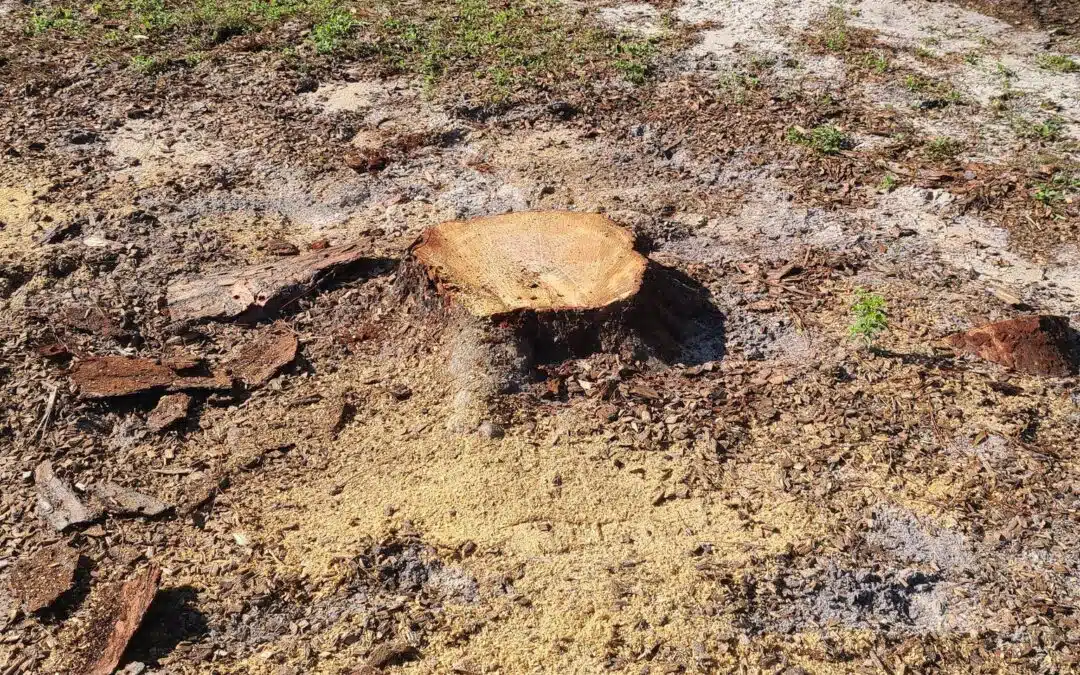
After grinding a stump, you might wonder how to restore the area without much hassle or expense. You have several landscaping options that balance aesthetics, soil health, and maintenance. Whether you prefer planting hardy ground covers or adding functional elements like benches, each choice comes with its pros and cons. Understanding these can help you decide what best suits your yard and lifestyle before you move forward.
Enhancing Soil Quality After Stump Grinding
After stump grinding, you’ll want to focus on improving the soil to support new plant growth. The grinding process can leave behind wood chips and debris that may affect soil pH and nutrient balance.
Start by removing large wood fragments and loosening the compacted soil. Add organic matter like compost or well-rotted manure to enrich the soil and boost microbial activity.
Test the soil’s pH to verify it’s suitable for your planned plants, adjusting it with lime or sulfur if necessary. Aerate the area to promote root penetration and drainage.
Choosing Low-Maintenance Plants for Stump Sites
Improving soil quality sets the stage for selecting plants that will thrive with minimal care at your stump site.
Choose species known for their resilience and low water needs, like sedums, ornamental grasses, or native wildflowers. These plants adapt well to varied conditions and require less attention.
Consider drought-tolerant succulents or ground covers that spread naturally, reducing the need for frequent replanting. Avoid plants prone to pests or diseases, as they’ll demand extra effort.
When picking plants, think about sunlight exposure and soil drainage at the stump location to guarantee they flourish.
Incorporating Decorative Mulch and Ground Covers
Decorative mulch and ground covers offer practical and aesthetic benefits when landscaping stump sites. You can use mulch to suppress weeds, retain soil moisture, and improve the area’s overall appearance.
Choose organic mulches like shredded bark or wood chips to enrich the soil as they break down. Ground covers such as creeping thyme, ajuga, or sedum add texture and color while preventing erosion around the stump. These plants require minimal care and spread quickly, creating a natural carpet that blends seamlessly with your landscape.
When applying mulch or planting ground covers, maintain a thin layer around the stump to avoid excess moisture buildup, which can cause decay. By incorporating these elements thoughtfully, you’ll enhance the site’s look and promote healthier soil conditions.
Designing Functional Garden Features Around Stump Areas
When you design functional garden features around stump areas, you turn an eyesore into a focal point that adds character and usability to your outdoor space.
Consider transforming the stump into a sturdy base for a birdbath or a unique planter. You can also build a small seating area by adding a circular bench around the stump, creating a cozy nook for relaxation.
Another option is to use the stump as a natural pedestal for garden sculptures or lanterns, enhancing your garden’s ambiance.
Don’t forget to level the surrounding ground and add a layer of mulch or decorative stones to define the area neatly.
Budget-Friendly Lawn Restoration Techniques
Although lawn restoration can seem costly, you don’t have to break the bank to bring your grass back to life. Start by evaluating the damaged area and removing debris to create a clean slate.
Choose grass seed that matches your existing lawn to guarantee uniform growth. You can save money by spreading seed yourself instead of hiring professionals. Use compost or natural fertilizers to enrich the soil without expensive chemicals.
Water consistently but avoid overwatering, which wastes resources and harms seedlings. Consider overseeding to fill in thin spots, promoting a denser lawn over time.
Finally, avoid heavy foot traffic on restored areas until the grass establishes. With these budget-friendly techniques, you can revive your lawn effectively without overspending.
Frequently Asked Questions
How Long Should I Wait Before Planting After Stump Grinding?
You should wait about two to three weeks after stump grinding before planting.
This gives the area time to settle and any remaining wood chips to decompose a bit. If you plant too soon, roots might struggle to establish in the disturbed soil.
Make sure to remove any large wood debris and amend the soil with fresh topsoil or compost to help your new plants thrive.
Can Stump Grinding Cause Damage to Nearby Trees?
Yes, stump grinding can cause damage to nearby trees if you’re not careful.
The grinding process can disturb the roots of adjacent trees, especially if they’re close to the stump.
You’ll want to keep a safe distance and avoid grinding too deep near other trees to prevent root injury.
Using a professional service or carefully inspecting the area beforehand can help protect your nearby trees from harm.
What Equipment Is Used for Professional Stump Grinding?
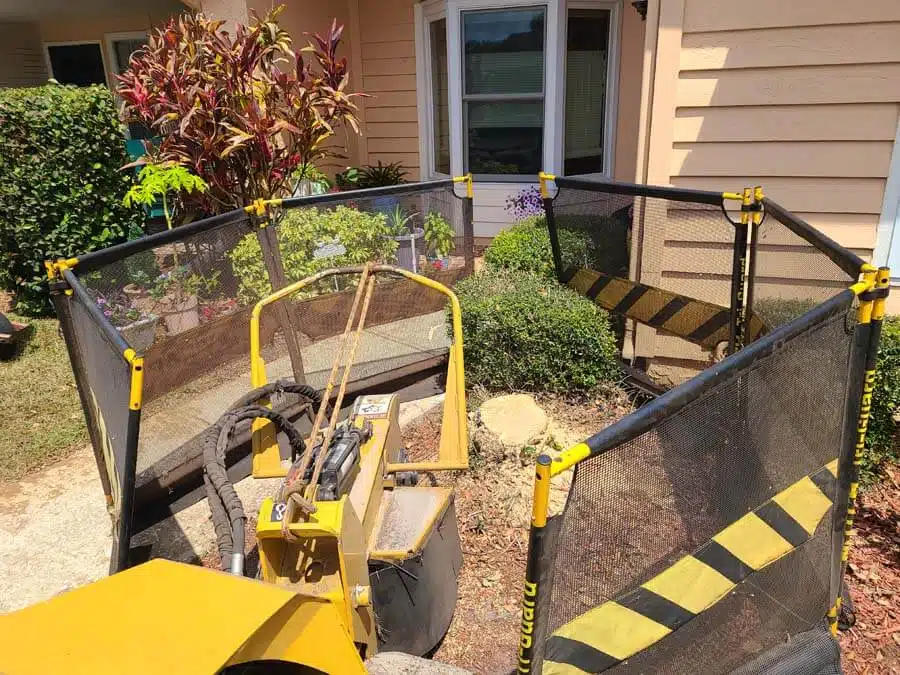
You’ll typically use a stump grinder, a powerful machine with a rotating cutting wheel equipped with sharp teeth to grind stumps down to below ground level.
Professionals often choose between walk-behind or self-propelled stump grinders, depending on the job size and terrain. Some models come with adjustable cutting arms for precision.
You’ll also need safety gear like goggles, gloves, and ear protection to work safely and efficiently during the process.
Is Stump Grinding Environmentally Friendly?
Yes, stump grinding is generally environmentally friendly because it recycles the stump into mulch, which can improve soil health and reduce waste.
When you grind a stump, you avoid using harmful chemicals often found in stump removal alternatives. Plus, it minimizes the need for heavy excavation, preserving surrounding plants and soil structure.
Just be sure to dispose of or reuse the wood chips responsibly to maintain eco-friendly landscaping.
How Deep Does Stump Grinding Go Below Ground Level?
Stump grinding usually goes about 4 to 12 inches below ground level.
You’ll want this depth to remove the visible part of the stump and some roots, preventing regrowth and making it easier to landscape over.
If you need deeper removal, you can request it, but keep in mind this might be more labor-intensive and costly.
Always check with your grinder operator to match the depth to your project’s needs.
Conclusion
After stump grinding, you’ve got a great chance to refresh your landscape with low-maintenance plants, decorative mulch, and creative garden features. By improving soil quality and choosing smart ground covers like creeping thyme or sedums, you’ll make your yard both beautiful and sustainable. Whether you repurpose the stump or restore the lawn on a budget, these realistic ideas will help you create a vibrant, functional outdoor space you’ll love spending time in.