If you’re tackling stump grinding in Odessa, FL, you’ll want to approach the job with the right tools and techniques to get it done safely and effectively. Knowing how to handle local soil conditions and hidden root systems can make all the difference. Before you start, there are key steps you shouldn’t overlook—steps that can save you time and prevent costly mistakes. Here’s what you need to keep in mind for a smooth process.
Understanding the Importance of Proper Stump Grinding
Although it’s tempting to leave a tree stump after cutting down a tree, you should understand why proper stump grinding matters.
Stumps can become breeding grounds for pests like termites and ants, which might spread to your home or other plants. They also create tripping hazards, especially if your yard is a play area for kids or pets. Leaving stumps can interfere with mowing and landscaping, making upkeep more difficult.
Proper grinding removes the stump below ground level, allowing you to replant or maintain a smooth, safe yard surface. It also prevents decay from attracting fungi that could harm nearby plants.
Taking the time to grind stumps properly guarantees your property stays safe, attractive, and easier to manage in the long run.
Choosing the Right Stump Grinder for Odessa FL Conditions
How do you pick the right stump grinder for Odessa’s unique climate and soil?
First, consider the soil type—Odessa’s sandy and sometimes clay-heavy ground demands a grinder with strong traction and adjustable depth control. You’ll want a machine that handles uneven terrain easily.
Next, think about the size of stumps you deal with. For larger, older stumps common in Florida’s landscape, a powerful, heavy-duty grinder with a wide cutting wheel works best.
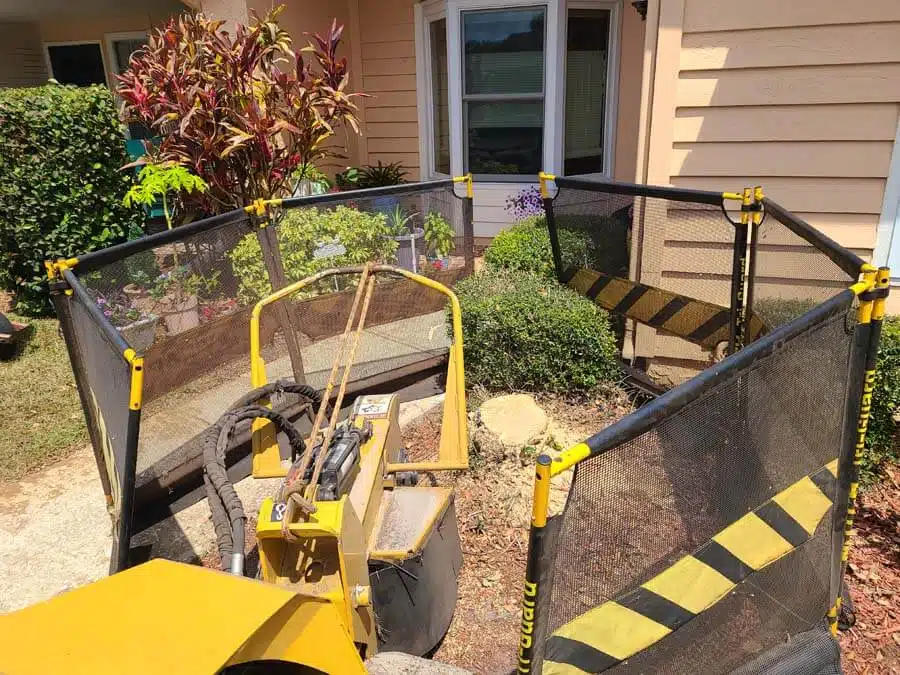
Also, factor in mobility; compact, self-propelled grinders are ideal if you’re maneuvering through tight residential spaces.
Finally, since Odessa experiences high humidity and heat, choose equipment known for durability and easy maintenance.
Safety Precautions Before Starting Stump Grinding
Choosing the right stump grinder for Odessa’s soil and climate sets you up for success, but before you start grinding, you need to prioritize safety.
First, wear protective gear—safety glasses, gloves, ear protection, and sturdy boots are essential.
Check the grinder thoroughly; make sure all guards are in place, controls function properly, and there are no loose parts.
Clear the area of debris, rocks, and bystanders to avoid flying hazards.
Never operate the grinder alone—having someone nearby helps in emergencies.
Avoid loose clothing that might get caught in machinery.
Finally, read the manufacturer’s guidelines and understand emergency shutdown procedures.
Taking these precautions guarantees your stump grinding goes smoothly without accidents or injuries.
Preparing the Area for Effective Stump Removal
Before you start grinding, make certain you clear the work area thoroughly to confirm safety and efficiency.
Remove rocks, branches, and debris around the stump to prevent any damage to your equipment or unexpected hazards.
Check for underground utilities like water, gas, or electrical lines by contacting local services before you dig.
Mark the stump’s boundary clearly, so you don’t accidentally grind outside the target area.
Trim any low-hanging branches or nearby plants that might obstruct your movement or visibility.
Verify the ground is dry and firm to maintain stable footing and avoid slipping.
Step-by-Step Guide to Grinding Stumps Efficiently
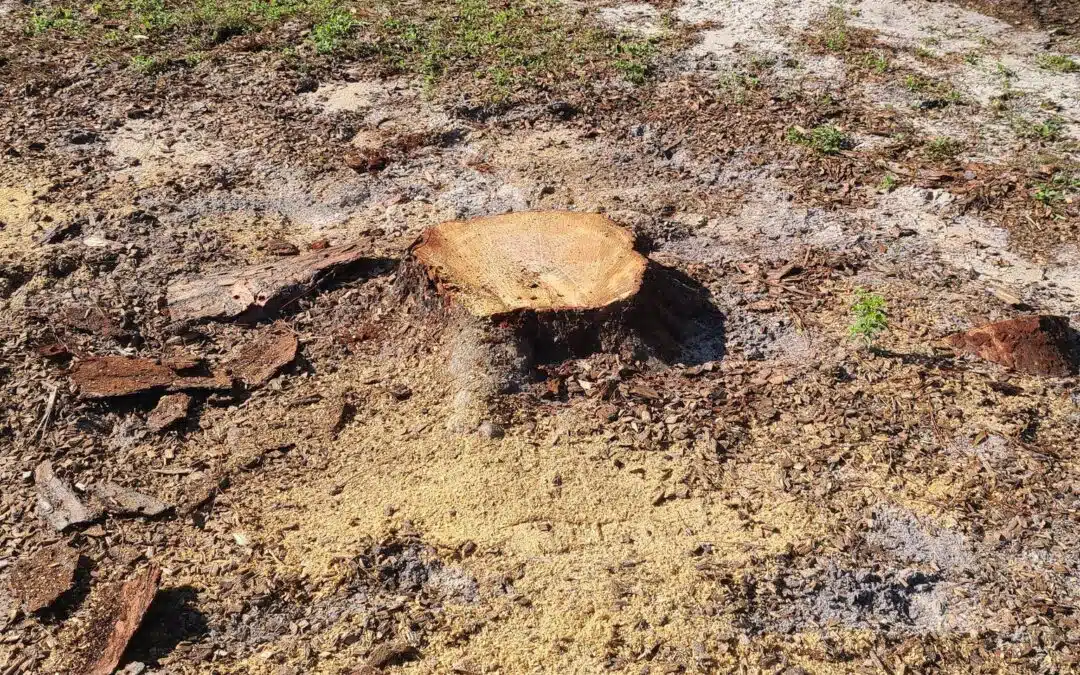
Once you’ve prepared the area, you can start grinding the stump by positioning your grinder’s blade at the outer edge and moving inward in a circular motion.
Keep the blade steady and apply consistent pressure to chip away the wood gradually. Make certain you wear protective gear—gloves, goggles, and ear protection.
Work your way around the stump, lowering the grinder slightly with each pass until you reach about 4 to 6 inches below ground level.
Clear away the wood chips frequently to monitor your progress and avoid clogging the grinder. Take breaks if the machine heats up.
Once the stump is ground down, fill the hole with soil or mulch to level the area. Following these steps guarantees an efficient and safe stump grinding process.
Handling Different Types of Tree Stumps in Odessa FL
How you handle a tree stump often depends on its type and size.
Softwood stumps, like pine, grind down quicker due to their less dense fibers, so you can work faster and use less force. Hardwood stumps, such as oak or hickory, require more patience and sharper equipment because they’re denser and tougher.
For larger stumps, break the job into sections, grinding deeper gradually to avoid overworking your machine. Smaller or rotted stumps are easier but watch for hidden nails or debris that could damage your grinder.
Always assess the stump’s condition before starting—dry, brittle stumps might crumble differently than fresh ones. Tailoring your approach guarantees efficient grinding and prevents unnecessary wear on your equipment in Odessa FL’s diverse landscape.
Dealing With Root Systems and Underground Obstacles
Dealing with root systems and underground obstacles requires careful attention because they can quickly damage your grinder or slow down the job.
Before you start, take time to inspect the area for large roots, rocks, or buried debris. Use a shovel to expose tough roots and plan your grinding path accordingly.
When you hit roots, grind them down gradually instead of forcing the machine, which prevents unnecessary wear. For stubborn underground obstacles like rocks, avoid grinding directly over them; instead, work around to protect your equipment.
Keep an eye on your grinder’s performance—unusual vibrations or sounds often indicate hidden obstacles.
Post-Grinding Cleanup and Soil Restoration Tips
After grinding the stump, you’ll want to focus on cleaning up the debris and restoring the soil to guarantee your yard looks neat and healthy.
Start by raking up wood chips and leftover mulch, which can smother grass if left too thick. Dispose of or repurpose the debris, such as using it for mulch in other garden areas.
Next, fill the hole left by the stump with quality topsoil, compacting it gently to prevent future sinking. Then, spread grass seed or lay sod to blend the area with your lawn.
Water the spot regularly to encourage healthy grass growth. Taking these steps assures your yard recovers quickly and looks seamless, maintaining the curb appeal of your Odessa property after stump removal.
Maintaining Equipment for Long-Term Stump Grinding Success
Because stump grinding equipment faces tough conditions, you need to maintain it regularly to confirm long-term success.
Start by inspecting your grinder before each use—check for loose bolts, worn teeth, and fluid leaks. Clean debris from the blades and engine area to prevent overheating and damage.
Sharpen or replace cutting teeth promptly to keep grinding efficient and safe. Regularly change engine oil and hydraulic fluids according to the manufacturer’s schedule to guarantee smooth operation.
Don’t forget to lubricate moving parts to reduce wear and tear. Store your equipment in a dry, sheltered place to avoid rust and corrosion.
Frequently Asked Questions
How Much Does Stump Grinding Typically Cost in Odessa FL?
You can expect stump grinding in Odessa, FL, to typically cost between $100 and $400, depending on the stump size and location.
Smaller stumps usually fall on the lower end, while larger or harder-to-reach stumps push the price up.
If you have multiple stumps, many companies offer discounts for bulk jobs.
It’s a good idea to get a few quotes so you can compare prices and services before making a decision.
Can Stump Grinding Prevent Insect Infestations Around My Property?
Yes, stump grinding can help prevent insect infestations around your property.
When you remove tree stumps, you eliminate a prime breeding ground for pests like termites, ants, and beetles. These insects are attracted to decaying wood, so grinding down stumps reduces their habitat and lowers the risk of them spreading to your home or garden.
How Long Does It Take for a Stump to Fully Decompose After Grinding?
It usually takes about 1 to 3 years for a stump to fully decompose after grinding, depending on factors like wood type, moisture, and climate.
You’ll notice the wood chips breaking down faster in warm, humid areas like Odessa.
To speed things up, you can add compost or mulch over the ground stump remains and keep the area moist.
Regularly turning the soil helps too, so decomposition happens more quickly.
Are There Any Local Regulations About Stump Removal in Odessa FL?
Yes, you should check with Odessa’s local government or county offices about stump removal regulations.
Some areas require permits or have rules about where and how you can dispose of stump debris. You might also find specific guidelines to protect local trees and wildlife.
Make sure to follow these rules to avoid fines and keep your property compliant. Calling the city hall or visiting their website is a good first step.
Can I Plant New Trees Immediately After Stump Grinding?
You can plant new trees right after stump grinding, but it’s best to wait a few weeks to let the soil settle and any leftover debris break down.
This gives your new tree a better chance to establish roots without competition. Make sure to remove the wood chips and fill the hole properly.
Preparing the soil well before planting will help your new tree thrive in its fresh spot.
Conclusion
By following these stump grinding tips in Odessa, FL, you’ll tackle any stump with confidence and ease. Choose the right heavy-duty grinder, prioritize safety, and prepare your area thoroughly before you start. After grinding, clean up debris and restore the soil to keep your yard healthy and attractive. With proper care and maintenance of your equipment, you’ll guarantee long-lasting success and a smooth, safe yard you can enjoy year-round.