When you’re planning to prepare your yard after stump grinding, there are a few important steps you’ll want to follow to guarantee a clean and safe space. It’s not just about clearing debris—you’ll need to evaluate the area, check for hidden hazards, and organize your cleanup plan. Taking these measures can save you time and prevent damage, but there’s more to think about before you get started.
Assessing the Yard for Stump Grinding
Before you begin grinding, take a close look at your yard to identify the stumps’ locations and any potential obstacles. You’ll want to map out each stump so you don’t miss any during the process.
Check for underground utilities, sprinkler heads, or irrigation lines nearby—they can be damaged if overlooked. Also, note the size and condition of each stump; larger or decayed ones may require special attention or extra equipment.
Assess the terrain—uneven ground or slopes could affect your grinding approach and safety. By thoroughly evaluating your yard, you’ll plan your work efficiently and avoid surprises.
This step helps you prepare mentally and physically, ensuring the grinding goes smoothly and safely without unnecessary delays or hazards.
Clearing the Area Around the Post Stump
Three key steps help you clear the area around the post stump effectively.
First, remove all debris like leaves, branches, and rocks from the immediate vicinity. This prevents any obstacles from interfering with the grinding process.
Next, trim back any overgrown grass or plants to create a clear workspace, giving you better access to the stump.
Finally, move any nearby furniture, tools, or garden ornaments at least several feet away to avoid damage and give yourself room to maneuver the grinder safely.
By following these steps, you’ll guarantee a safer, cleaner environment that makes stump grinding smoother and more efficient.
Taking the time to clear the area properly also helps you spot any hidden hazards before you start.
Checking for Underground Utilities
Once you’ve cleared the area around the post stump, the next step is to verify if any underground utilities run nearby. You don’t want to risk hitting gas lines, water pipes, or electrical cables while grinding.
Start by contacting your local utility notification center—most areas have a free service to mark underground lines for you. Wait for the markings before proceeding.
Pay close attention to flags or paint on the ground indicating different utilities. If you spot any, adjust your grinding plan accordingly to avoid those zones. Taking this precaution keeps you safe and prevents costly damage.
Don’t skip this step; it’s essential for a smooth and hazard-free stump grinding process. Always double-check to protect yourself and your property.
Gathering Necessary Safety Equipment
Since stump grinding involves heavy machinery and flying debris, you’ll need to gather the right safety equipment to protect yourself throughout the process.
Start with sturdy work gloves to shield your hands from sharp splinters and rough surfaces. Wear safety goggles or a face shield to protect your eyes from flying wood chips. Don’t forget hearing protection—earplugs or earmuffs will help prevent damage from the loud grinder noise.
Sturdy, closed-toe boots with good traction are essential to keep your feet safe and stable. Long sleeves and pants can protect your skin from scratches and debris. Finally, a dust mask or respirator will help you avoid inhaling sawdust and other particles.
Having all these safety items ready guarantees a safer and smoother stump grinding experience.
Selecting the Right Stump Grinding Equipment
When you choose the right stump grinding equipment, you make the entire job easier and safer. Start by considering the size and location of the stump. For smaller stumps, a handheld grinder might be enough, while larger stumps require a heavy-duty machine.
Confirm the grinder has a sharp, durable cutting wheel designed for wood removal. Check the power source: gas-powered grinders offer more mobility, but electric ones are quieter and require less maintenance.
Look for features like adjustable cutting depth and sturdy wheels for stability. Don’t forget to inspect the equipment for wear and tear before use.
Selecting the right tool tailored to your specific stump and workspace will save time, reduce effort, and minimize safety risks during grinding.
Setting Up a Safe Work Zone
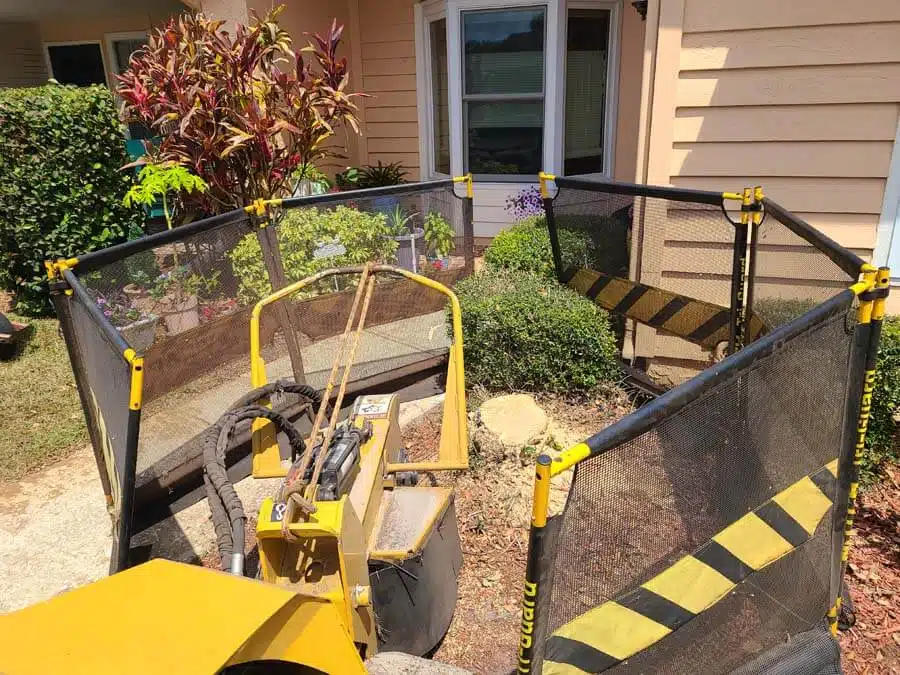
Before grinding begins, you need to establish a clear and secure work zone to protect yourself and others. Start by marking the area around the stump with cones, tape, or temporary fencing. This prevents accidental entry by pets, children, or passersby.
Remove any nearby flammable materials and debris to reduce fire risk. Make sure your work zone has good lighting and stable footing to avoid slips and falls. Keep your tools and equipment organized within easy reach but out of the immediate grinding path.
Always wear appropriate personal protective equipment like safety goggles, ear protection, gloves, and sturdy boots. Finally, inform anyone nearby about the work taking place and the boundaries of your work zone to maintain safety throughout the grinding process.
Planning for Stump Grinding Debris Disposal
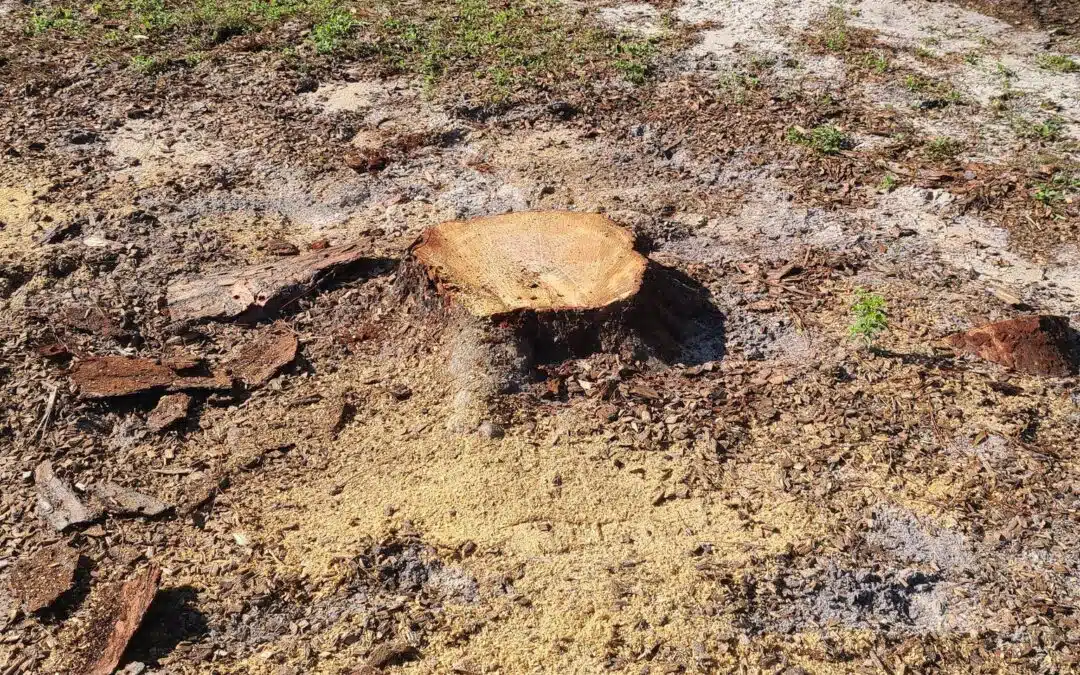
Although stump grinding efficiently removes the visible part of the stump, it leaves behind a significant amount of wood chips and debris that you’ll need to manage.
Start by deciding where to collect the debris during the grinding process—using tarps can simplify cleanup. Have sturdy bags or containers ready for hauling away the wood chips, or plan a spot if you intend to compost or mulch them on-site.
Check local regulations to guarantee proper disposal methods, especially if you’re renting equipment. If you’re working with a professional, confirm whether debris removal is included or if you’ll need to handle it yourself.
Preparing for debris disposal ahead of time saves you from a messy aftermath and keeps your yard looking tidy once the stump is gone.
Scheduling the Stump Grinding Process
Since stump grinding requires specialized equipment and sometimes professional help, you’ll want to schedule the process at a time that minimizes disruption and fits your availability.
Check the weather forecast beforehand to avoid rain or extreme heat, which can delay work or create unsafe conditions.
Coordinate with the grinding service early, especially during peak seasons, to secure your preferred date.
Make certain your yard is accessible and clear of obstacles on the day of grinding.
If you have pets or children, plan to keep them safely away from the work area.
Also, consider your neighbors and notify them if noise might be an issue.
Frequently Asked Questions
How Long Does Stump Grinding Usually Take?
Stump grinding usually takes about 30 minutes to a couple of hours, depending on the size and type of the stump.
If the stump is small and soft, you’ll finish quickly. Larger, tougher stumps, especially with deep roots, will take longer.
You can speed things up by clearing debris and cutting the stump closer to the ground beforehand.
Just make sure you have the right equipment and safety gear to stay efficient and safe.
Can Stump Grinding Prevent New Tree Growth?
Yes, stump grinding can help prevent new tree growth by removing the main root mass that sprouts new shoots.
When you grind the stump down below ground level, it reduces the chance of regrowth from the remaining roots.
However, some species are persistent and might still send up shoots, so you may need to monitor the area and remove any new sprouts promptly to keep your yard clear.
Is Stump Grinding Noisy or Disruptive?
Yes, stump grinding can be noisy and a bit disruptive.
You’ll hear a loud, grinding sound as the machine chews through the stump, which might startle pets or neighbors.
However, the noise usually lasts only a short time, depending on the stump’s size.
If you’re concerned, you can plan the work during hours when it won’t bother others or use ear protection to stay comfortable while it’s happening.
What Is the Cost Range for Stump Grinding Services?
You can expect stump grinding services to cost anywhere from $75 to $350 per stump, depending on size, location, and your region.
Smaller stumps are on the lower end, while larger or hard-to-reach ones push the price up. Some companies charge by the hour, typically $100 to $200.
It’s smart to get a few quotes so you’re sure you’re getting a fair deal without surprises.
Can I Plant Grass Immediately After Stump Grinding?
You can plant grass immediately after stump grinding, but it’s best to wait a few days to let the area settle and remove any debris.
After grinding, the soil might be loose, so rake it smooth and add some topsoil or compost to improve growth conditions.
Once the ground is prepared, spread grass seed or lay sod.
Keep the soil moist, and your new grass should take root nicely.
Conclusion
By following these tips, you’ll make stump grinding safer and more efficient. Start by evaluating your yard and clearing the area, then check for underground utilities to avoid surprises. Don’t forget to gather your safety gear and choose the right equipment before setting up a secure work zone. Planning for debris disposal and scheduling the process thoughtfully will keep your yard clean and stress-free. You’ll be ready to enjoy a smoother, stump-free yard in no time!