When you need to remove a tree stump, choosing an environmentally friendly method can make a big difference. You might not realize how traditional stump grinding affects the soil and air quality. Fortunately, there are options that reduce pollution and preserve the surrounding ecosystem. Understanding these alternatives can help you make a responsible choice that benefits both your property and the planet. But what exactly makes a stump grinding option eco-friendly?
Benefits of Eco-Friendly Stump Grinding
Although traditional stump grinding methods have served well for years, choosing eco-friendly stump grinding offers clear benefits.
When you opt for eco-friendly techniques, you reduce chemical use and minimize soil disruption, which helps maintain your land’s natural health. You’ll also avoid unnecessary noise and air pollution, making your yard a more pleasant place for you and your neighbors.
Eco-friendly grinding methods typically use energy-efficient equipment, so you save resources and reduce your carbon footprint. Plus, these approaches encourage recycling the wood chips as mulch, promoting sustainable landscaping.
How Stump Grinding Impacts the Environment
When you grind a stump, you directly affect the surrounding environment in several ways. The process removes the old tree roots, which alters soil structure and can impact local microorganisms.
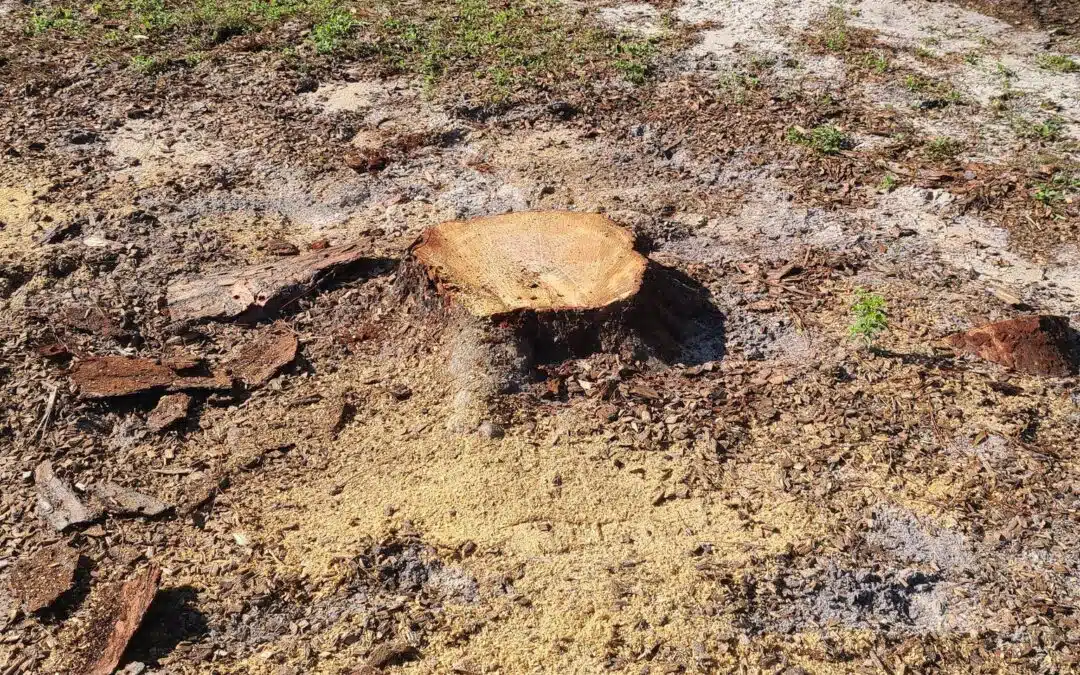
Grinding produces wood chips that, if left on-site, can enrich the soil, promoting new plant growth. However, the noise and emissions from the grinding equipment may temporarily disturb nearby wildlife and air quality.
You also change water drainage patterns slightly by removing the stump, which might influence local moisture levels. If you use non-eco-friendly fuels or lubricants, you risk contaminating soil or water.
Being mindful of these impacts helps you choose methods that minimize harm, preserving your landscape’s health and supporting local ecosystems.
Biodegradable Lubricants for Stump Grinding Machines
Since stump grinding machines rely heavily on lubricants to function smoothly, choosing biodegradable options can greatly reduce environmental harm.
When you opt for biodegradable lubricants, you minimize the risk of harmful chemicals seeping into the soil or nearby water sources. These lubricants break down naturally, leaving no toxic residues behind.
Plus, they perform just as well as traditional oils, ensuring your machine runs efficiently without sacrificing environmental safety. You’ll also find that biodegradable lubricants often come from renewable resources, making them a sustainable choice.
Using Electric and Battery-Powered Stump Grinders
If you want to reduce emissions and noise during stump removal, electric and battery-powered stump grinders offer a cleaner alternative to gas-powered models.
These machines run quietly and produce zero exhaust, making them ideal for residential areas or eco-sensitive locations. You’ll appreciate their lower maintenance needs since they don’t require oil changes or fuel refills.
Battery-powered grinders give you the freedom to work without cords, though you should keep extra batteries handy for longer jobs. Electric grinders plug in, so plan your work near an outlet or use an extension cord rated for outdoor use.
While electric models may have less power than gas grinders, they handle most small to medium stumps efficiently. Choosing these options helps you minimize your environmental footprint during stump grinding.
Techniques to Minimize Soil Disruption During Grinding
To protect the surrounding soil during stump grinding, you should adopt techniques that reduce disturbance and compaction.
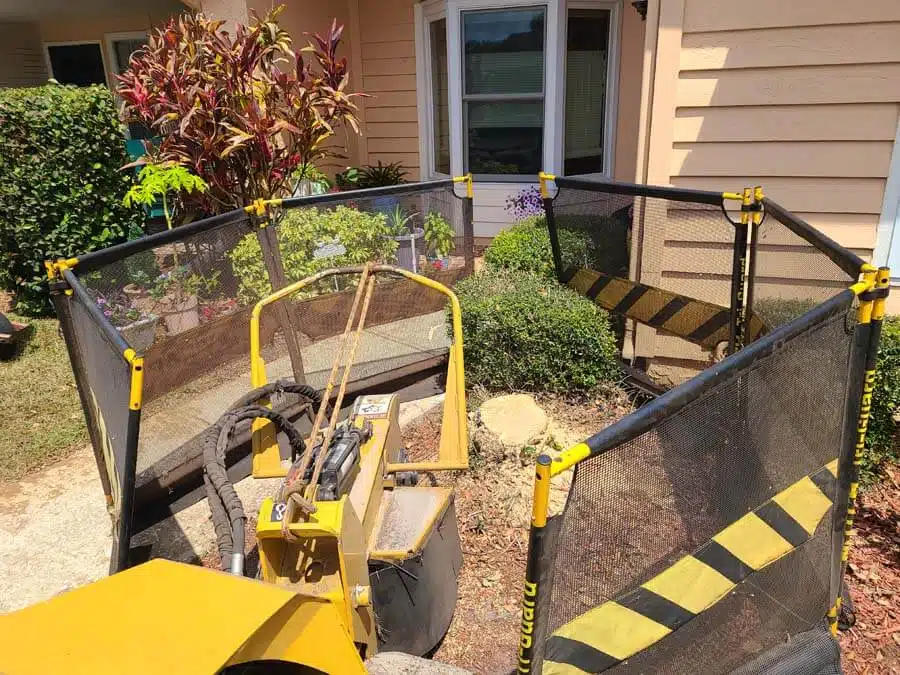
Start by limiting heavy equipment use around the stump to prevent soil crushing. Use smaller, lighter grinders when possible, and operate them carefully to avoid digging deeper than needed.
Mark the stump’s edges clearly to focus grinding precisely, minimizing unnecessary soil exposure. Avoid working when the ground is wet, as this increases compaction risk.
You can also place protective mats or boards under equipment to distribute weight evenly and reduce soil damage.
Finally, maintain proper depth control throughout grinding to preserve soil structure.
These simple steps help keep your soil healthy, preventing erosion and supporting nearby plants while you remove the stump efficiently.
Recycling and Reusing Stump Grinding Debris
Protecting the soil during stump grinding not only preserves the environment but also leaves you with valuable organic material.
Once you’ve ground the stump, don’t just discard the debris. You can recycle this wood chip material by using it as a natural filler for garden paths or erosion control on slopes. It also works well as a compost ingredient, enriching your soil with nutrients as it breaks down.
Before reusing, make sure the debris is free from chemicals or disease to prevent spreading problems.
Organic Mulching From Ground Stump Material
When you grind a stump, you create an excellent source of organic mulch that can benefit your garden in multiple ways.
You can spread the ground stump material around your plants to help retain moisture, regulate soil temperature, and suppress weeds naturally. This mulch slowly breaks down, enriching your soil with valuable nutrients and improving its structure over time.
Plus, it’s a great way to recycle materials on-site without needing chemical fertilizers or synthetic products. Just make sure the mulch layer isn’t too thick—about two to three inches is ideal—to prevent mold and allow air circulation.
Using organic mulch from your stump grinding not only supports plant health but also reduces waste, making it an eco-friendly choice for your garden care routine.
Selecting Local Eco-Conscious Stump Grinding Services
How do you choose a stump grinding service that aligns with your eco-friendly values? Start by researching local companies that emphasize sustainable practices.
Look for providers who use electric or low-emission equipment to minimize environmental impact. Check if they recycle or repurpose the wood chips instead of sending them to landfills.
Ask about their disposal methods and whether they avoid harmful chemicals during the process. Reading customer reviews can reveal how committed a company is to green practices.
Choosing local services reduces transportation emissions, supporting both your values and the community. By prioritizing these factors, you guarantee your stump removal project contributes positively to the environment without compromising efficiency or quality.
Reducing Carbon Footprint in Stump Removal Processes
Once you’ve chosen a stump grinding service committed to eco-friendly methods, you can focus on ways to reduce the carbon footprint of the removal process itself.
Start by scheduling the work during off-peak hours to avoid unnecessary idling and traffic delays. Ask if the company uses energy-efficient or electric-powered equipment, which emits less pollution than traditional gas-powered machines.
You can also minimize trips by combining multiple stumps or related yard tasks into a single visit. Encourage your service provider to recycle or repurpose the wood chips instead of sending them to a landfill.
Finally, consider planting native vegetation after removal to help offset carbon emissions naturally. Taking these steps guarantees your stump removal is as green and sustainable as possible.
Alternatives to Mechanical Stump Grinding in Odessa
Although mechanical stump grinding is common, you might want to explore alternatives that better suit your environmental values or specific yard needs in Odessa.
One option is using natural decomposition methods, where you apply nitrogen-rich fertilizers or compost to speed up the stump’s breakdown over time.
Another eco-friendly choice is chemical stump removers made from potassium nitrate, which accelerates rotting without heavy machinery.
You could also consider manual removal using hand tools like mattocks or axes if the stump is manageable in size.
These methods reduce noise, emissions, and soil disruption compared to mechanical grinding.
Choosing the right alternative depends on your timeline, stump size, and environmental priorities.
Frequently Asked Questions
How Long Does Eco-Friendly Stump Grinding Typically Take?
Eco-friendly stump grinding typically takes about 1 to 3 hours, depending on the stump’s size and root depth.
When you choose green methods, they focus on minimizing environmental impact, which might mean a bit more careful, slower work.
However, you’ll appreciate that the process avoids harmful chemicals and promotes natural decomposition.
If you’re dealing with a larger stump or tougher roots, expect the job to lean toward the longer side.
Can Stump Grinding Prevent Regrowth Naturally?
Yes, stump grinding can naturally prevent regrowth by removing the stump and roots where new shoots emerge.
When you grind the stump down below ground level, it cuts off the energy source for regrowth. However, some species might still sprout from roots, so you may need to monitor and remove any new shoots manually.
What Safety Precautions Should Be Taken During Eco-Friendly Stump Grinding?
You should wear protective gear like gloves, goggles, and ear protection to stay safe during eco-friendly stump grinding.
Make sure the area is clear of pets, children, and obstacles. Always check your equipment for damage before starting.
Work slowly and stay alert to avoid kickbacks or flying debris. Also, keep a first aid kit nearby and follow the manufacturer’s guidelines to minimize risks while being environmentally conscious.
Are There Any Noise Regulations for Stump Grinding in Residential Areas?
Yes, you’ll find noise regulations for stump grinding in most residential areas.
Local ordinances usually limit noise levels during certain hours, often restricting loud activities early in the morning or late at night.
You should check with your city or county to understand specific rules and permissible times.
Using quieter, eco-friendly equipment can help you stay compliant and avoid disturbing your neighbors while getting the job done efficiently.
How Much Does Environmentally Friendly Stump Grinding Cost Compared to Traditional Methods?
You’ll usually find environmentally friendly stump grinding costs slightly higher than traditional methods, ranging from $150 to $400 depending on stump size and location.
That’s because eco-friendly options often use electric or battery-powered equipment, which costs more upfront but reduces emissions and noise.
While traditional gas-powered grinding might be cheaper initially, choosing greener methods helps protect your yard and neighborhood, making the extra cost worthwhile in the long run.
Conclusion
By choosing eco-friendly stump grinding options like electric or battery-powered grinders and biodegradable lubricants, you’re greatly reducing pollution and protecting soil health. Recycling the wood chips as mulch or compost further supports sustainable landscaping. These small changes not only lower your carbon footprint but also help maintain a balanced environment. So next time you need stump removal, go green—you’ll make a positive impact on your surroundings while getting the job done efficiently and responsibly.